The Master of Science in Health Systems Administration (MHSA) is a two-year, 42-credit program that equips aspiring leaders with the skills to shape the future of healthcare. Delivered in a hybrid format, the program is primarily online and includes four one-week on-campus intensives that serve as signature learning experiences.
Apply by June 1 with No Application Fee
Submit your Georgetown MHSA application at no cost for the remainder of the 2026–2027 cycle.
About the MHSA Program
- CAHME Accredited, competency-based program led by nationally renowned industry leaders and esteemed faculty active in public health, research, and systems of care leadership
- 42-credit, 21-month-long curriculum framed by Jesuit values and enriched through experiential learning and professional development
- Hybrid delivery model featuring primarily online, synchronous evening courses offered two to three nights per week
- Four weeklong on-campus intensives held at Georgetown University’s Capitol Campus in Washington, D.C., offering immersive learning and unique access to influential health systems and health care legislative exposure
- Designed for early- to mid-career professionals, featuring small class sizes and direct exposure to industry leaders, subject matter experts, and a robust alumni network
Why Choose This Program?
What Our Alumni Say

“The MHSA program gave me the flexibility I needed as a working professional and also a sense of community. The hybrid structure allowed me to engage and build genuine relationships with my cohort and professors. The experiential learning opportunities, from global learning experiences to institutional site visits, really broadened my perspective. The program strengthened my skills, expanded my network, and continues to support me as an alum.”
— Angel Phan (G’25)
______________________________________

“Being in D.C. meant having access to health policy wonks not only on the federal but local level as well. The smaller, cohort-structured program was appealing because I wanted to build meaningful relationships with classmates and faculty.”
— Raynard Ware (G’18)
______________________________________

“The great thing about Georgetown was that there was a lot of support and opportunity to do things beyond just the coursework to develop as a healthcare leader.”
— Ila Anita Flannigan (G’09)
Experiential Learning
On-Campus Intensives (OCIs)
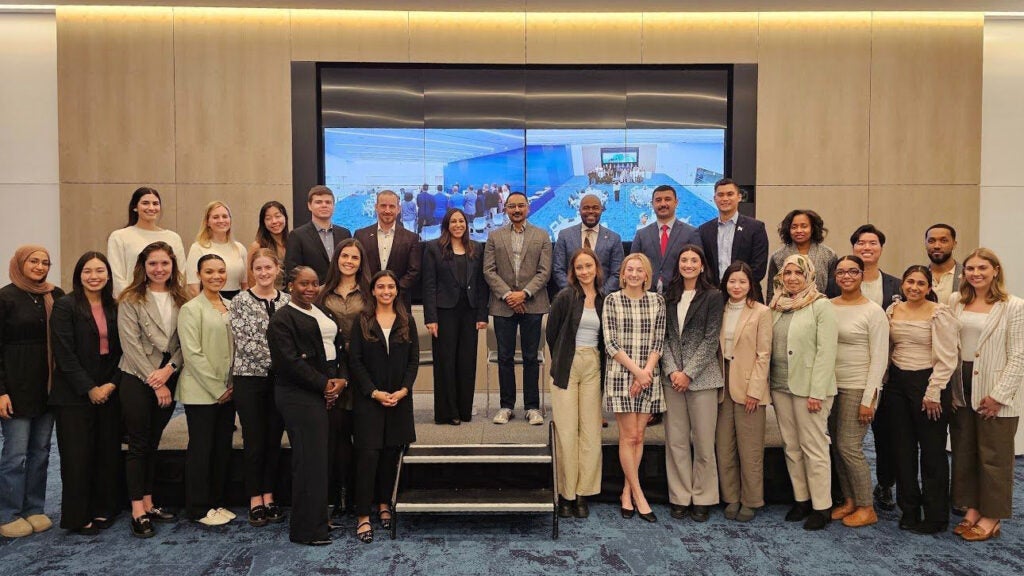
On-Campus Intensives (OCIs) are weeklong campus visits that allow students to engage deeply in classes, networking, site visits, and career events. They are a core part of the MHSA experience, providing opportunities to:
- Meet peers, faculty, and alumni,
- Attend seminar-style courses on pressing healthcare topics,
- Participate in career workshops and professional development events led by faculty, alumni, and industry leaders,
- Conduct site visits to health care organizations, and
- Network with local healthcare leaders and members of the Georgetown community.
Global Comparative Health Experience
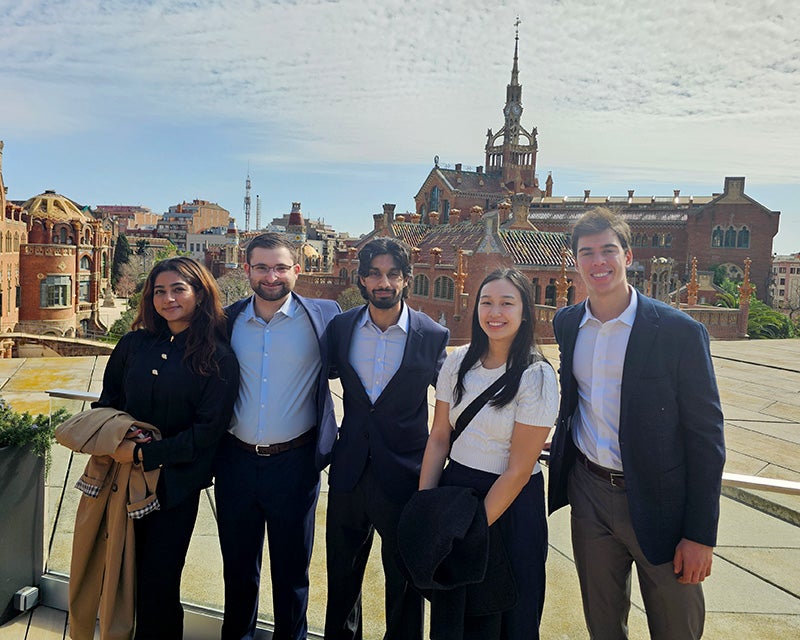
Each year, MHSA students may participate in an optional comparative health system global experience, which includes site visits, engagement with health system leaders and academic faculty, and team-based activities.
Recent trips have included:
- Spain
- Seoul, South Korea
- Foz do Iguaçu, Brazil and
- Singapore
American College of Healthcare Executives (ACHE) & Annual Congress on Healthcare Leadership

Student Associate Membership in ACHE is highly encouraged, providing early career development and valuable networking opportunities.
Each year, students have the opportunity to attend the annual ACHE Congress on Healthcare Leadership, where they connect with national health care leaders, alumni and potential employers, and participate in educational sessions covering key trends and issues. The MHSA Alumni Reception is a highlight of the Congress, offering a time to come together and celebrate the program community.
Community and Network
Alumni Network
The MHSA alumni network is an integral part of the program community. It provides current students with ongoing opportunities for mentorship, professional development and networking.
Alumni frequently engage with the program by sharing insights through guest lectures, presentations, and panel discussions, offering guidance on career growth and leadership challenges, and connecting students to broader professional networks. This active community of 400+ alumni fosters lasting relationships that extend beyond graduation, allowing students and alumni alike to collaborate, exchange ideas, and continue learning from one another throughout their careers.
Click the map to view details about alumni hometown locations in the U.S. and globally:
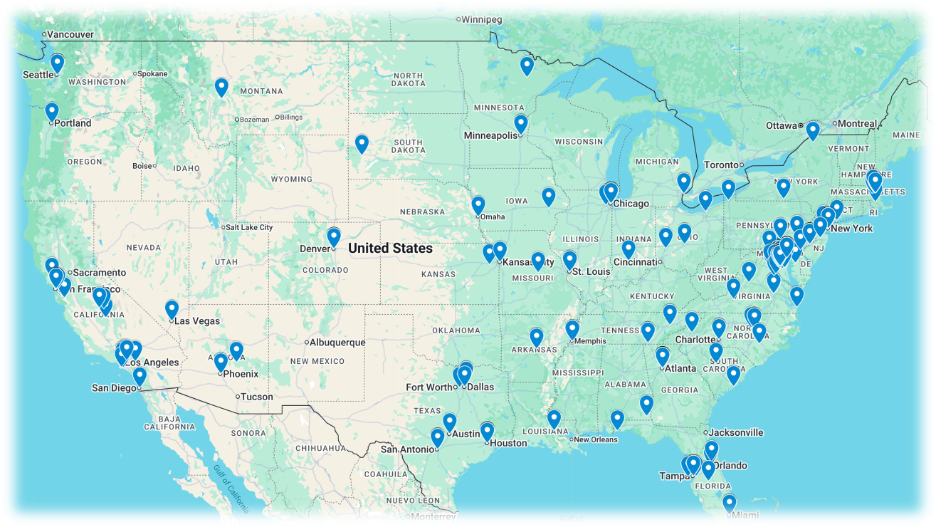
This map illustrates U.S.-based MHSA alumni hometown locations. Each pinpoint represents at least one alumnus; multiple alumni may be represented by a single location. International-based MHSA alumni hometown locations include: Rwanda, Israel, Saudi Arabia, United Arab Emirates, Pakistan, India, China, South Korea, Japan and Australia. Map Data ©2026 Google
Health Systems Administration Student Association (HSASA)
The Health Systems Administration Student Association (HSASA) fosters community and peer-to-peer connections among MHSA students while enhancing academic and professional growth.
The association provides opportunities for students to connect socially and professionally throughout the program, host professional development events such as webinars, workshops, and guest speaker sessions, and take on leadership roles that offer hands-on administrative experience.
Why Pursue an MHSA?
Our faculty director explains why now is an opportune time to pursue an MHSA at Georgetown.
Program Outcomes
Program Completion and Employment Rates
Alumni Employment Outcomes
Our 400-plus MHSA graduates serve in leadership roles in hospitals, integrated health systems, community health centers, ambulatory & home health agencies, medical group practices, health maintenance organizations, consulting firms, and federal agencies.
Graduates have been employed with organizations such as MedStar Health, Booz Allen Hamilton, Deloitte Consulting, Georgetown University School of Medicine, Hospital Corporation of America, PhRMA, PricewaterhouseCoopers, MD Anderson Cancer Center, Children’s National Hospital, Kaiser Permanente, U.S. Food and Drug Administration, National Institutes of Health, and UnitedHealthcare.
Sample job titles:
- Administrative Fellow
- Program Manager
- Quality Specialist
- Vice President of Operations
- Policy Analyst
- Deputy Executive Director
- Healthcare Consultant
- Chief Administrative Officer
- Department Administrator
Student Experience
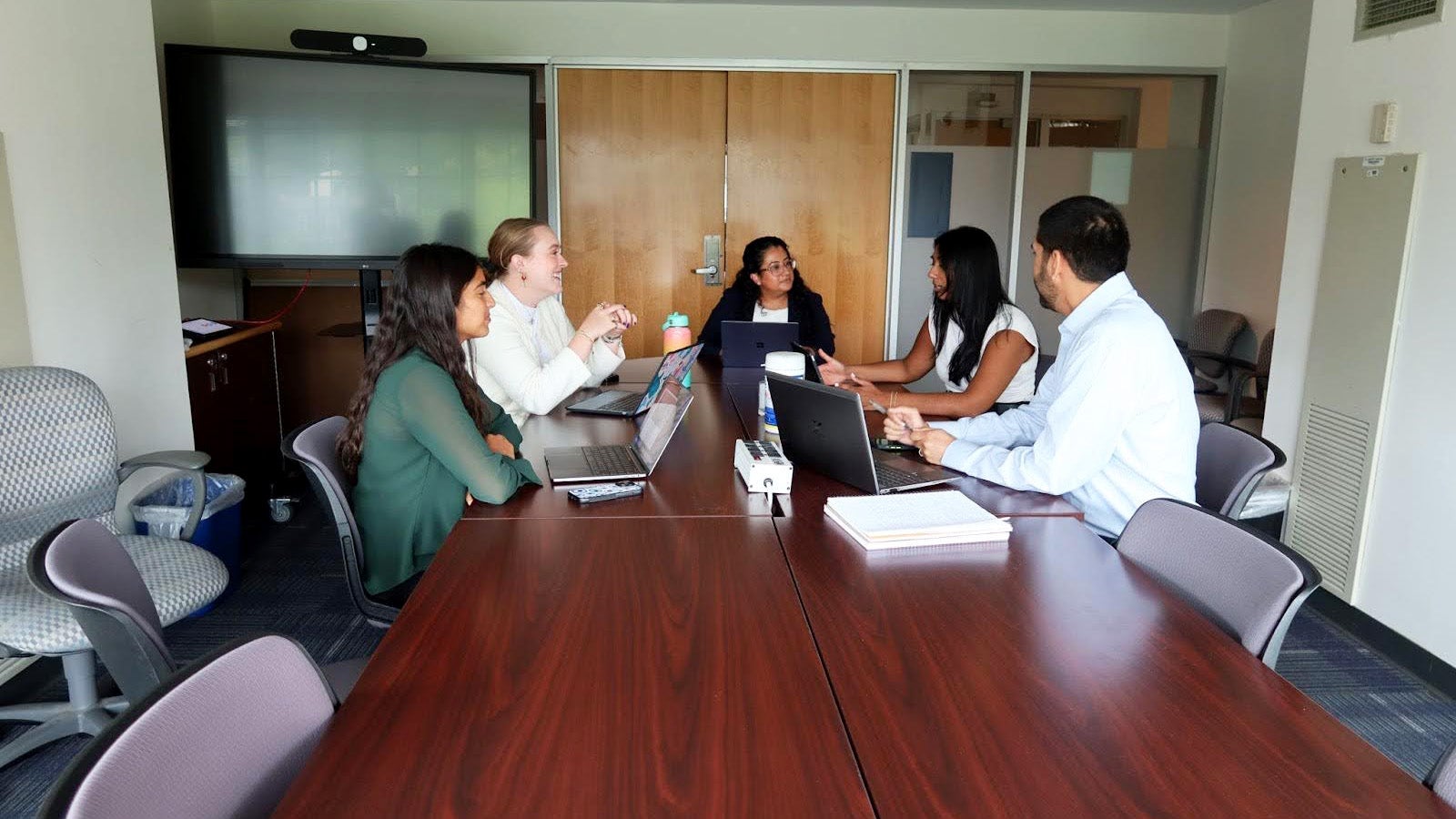
MHSA students have the opportunity to:
Learn from exceptional faculty
Engage with nationally recognized faculty who are leaders in their fields and actively involved in health systems leadership, research, and public health practice.
Study in the nation’s capital
Benefit from Washington, D.C.’s unique role as the center of U.S. health care policy and innovation
Learn alongside a diverse peer cohort
Collaborate with classmates from varied professional backgrounds and sectors, enriching classroom discussion and peer learning.
Engage in equity-focused learning grounded in Jesuit values
Examine health systems through the lens of equity and social justice, reflecting Georgetown University’s commitment to academic excellence and cura personalis– the Jesuit principle of care for the whole person.
Experience a distinctive hybrid program format
Participate in primarily online coursework complemented by dynamic on-campus intensives, national and regional conferences, case competitions, comparative health system global experiences, and on-the-job competency-based experiential projects.
Build professional and leadership skills
Take advantage of individualized professional coaching, leadership development, and networking opportunities with alumni and industry leaders.
Explore health systems outside the U.S.
Participate in an optional annual comparative health systems global experience.
Program Admissions
Application Deadlines
Priority Deadline: January 15, 2026
Final Deadline: June 1, 2026
MHSA-Specific Financial Aid Information
Upcoming Events & Info Sessions
Join us for an upcoming information session to learn more about the MHSA program. These sessions offer a closer look at the program of study, student experience, alumni outcomes, and application process — with opportunities to connect directly with program leadership and current students to ask your questions.
- Monday, February 23, 2026, from 6:00 – 7:00 p.m. ET
- Monday, March 30, 2026, from 12:00 – 1:00 p.m. ET
- Thursday, April 30, 2026, from 5:00 – 6:00 p.m. ET
Current Students
Visit our student resources page for academic calendars and other information.

Click to View the Following Resources
Program Faculty
Our faculty members have backgrounds in academic and practice-oriented settings.