
Student-Driven Research Highlighted at 2026 Undergraduate Research Conference
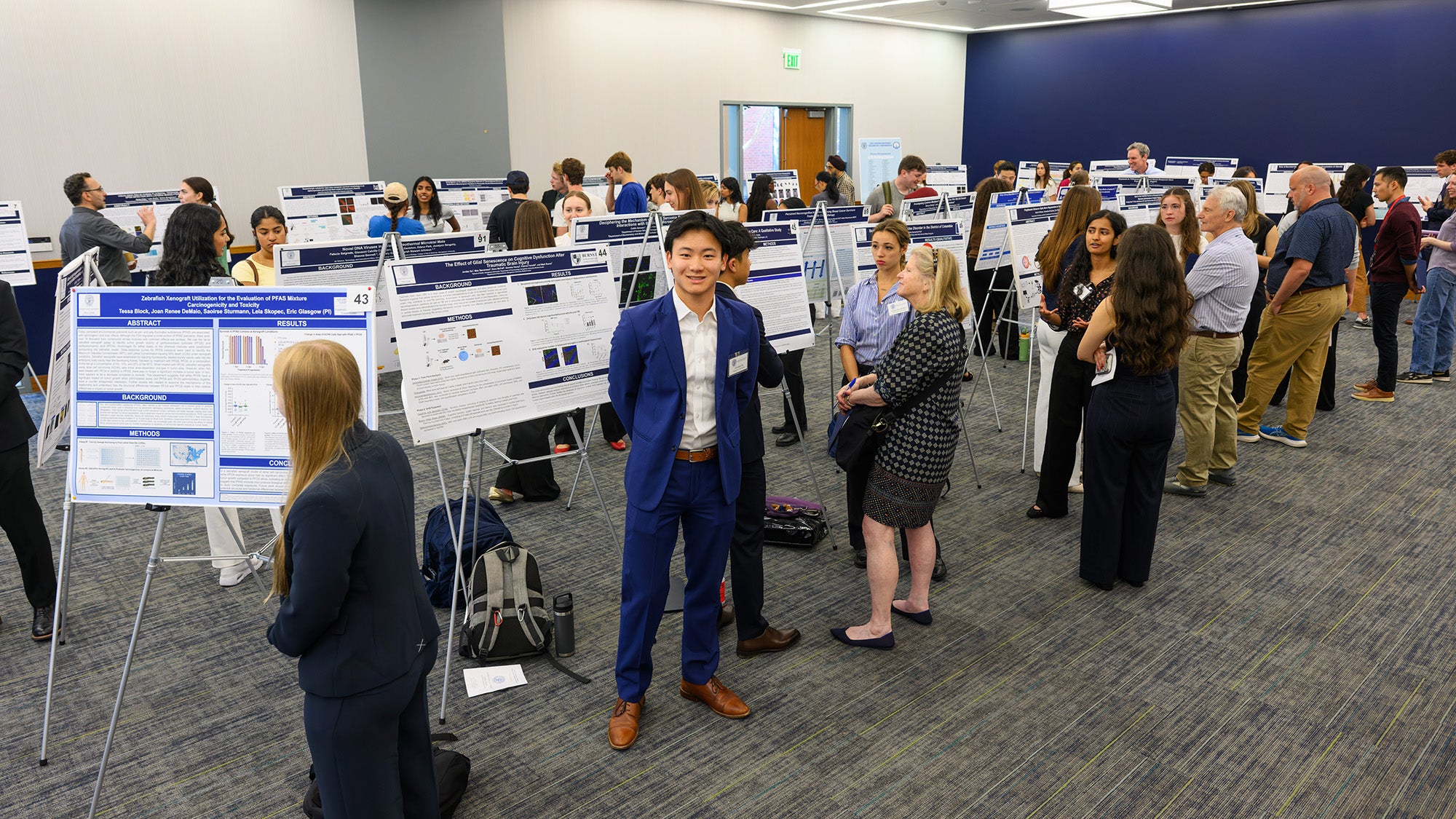
(April 24, 2026) — The 2026 Undergraduate Research Conference (URC) brought together undergraduate researchers from across campus for a daylong showcase of student-driven work.
Recognized as Georgetown’s premier undergraduate research forum for science and health, the April 15 conference at the Healey Family Student Center continues to grow in both scale and impact. Since its founding in 2003, more than 1,400 student posters have been presented. This year, however, marked a notable shift as interest in the conference has dramatically increased.
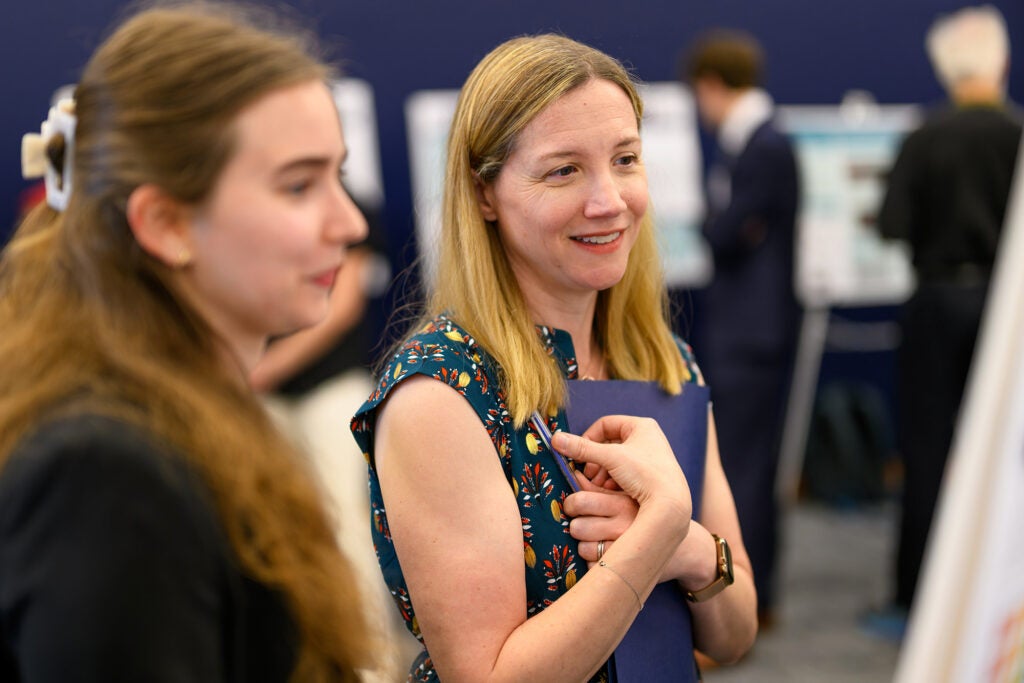
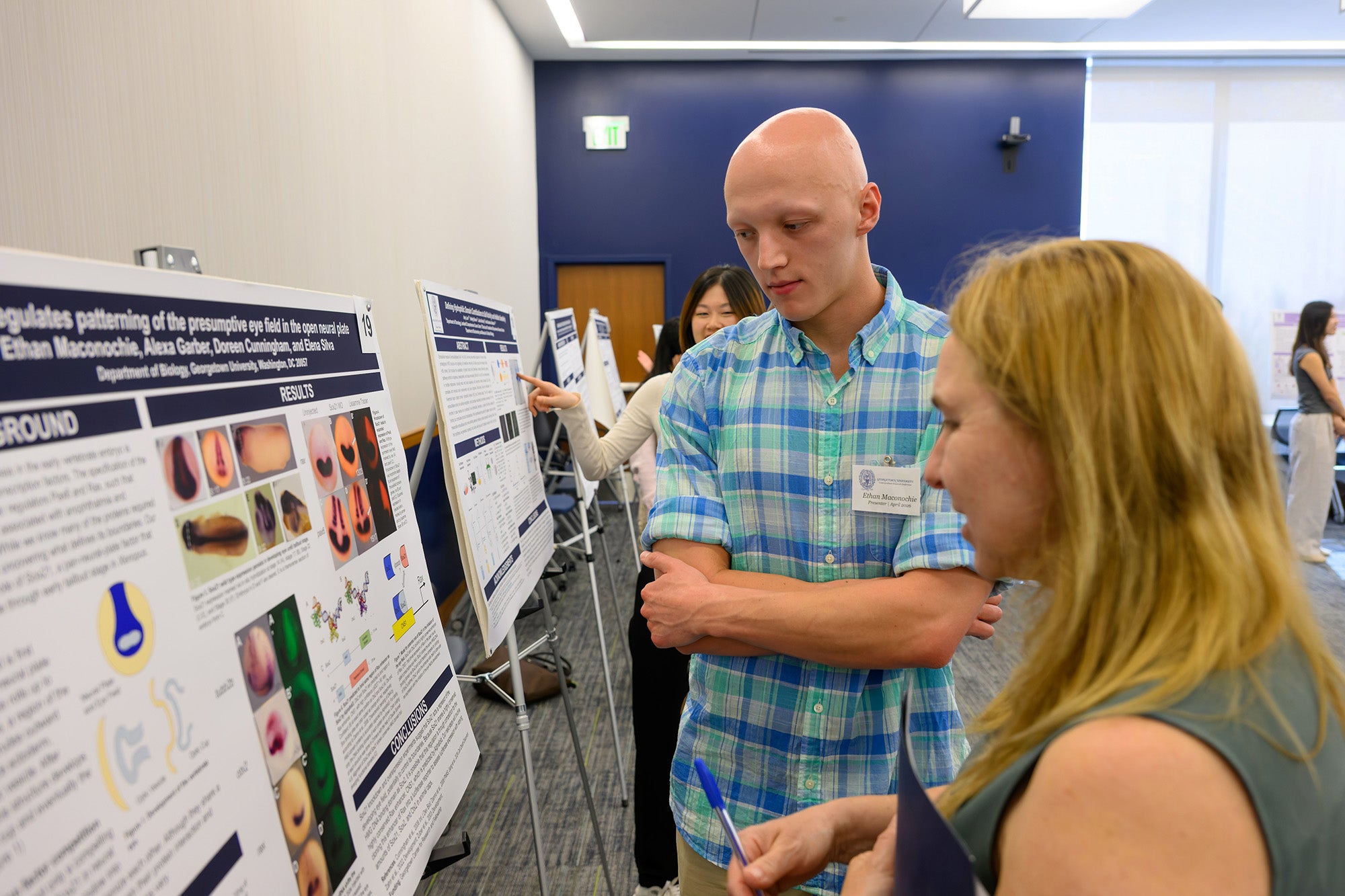
Human Science professor Jan LaRocque, PhD, a faculty advisor for the conference, reviewed a student’s poster.
“The most significant change this year was making the event selective,” said Jan LaRocque, PhD, associate professor of human science and one of the faculty advisors for the conference. “We selected 100 abstracts through a competitive process, prioritizing hypothesis-driven work. A majority of the data presented was acquired by and/or analyzed by the student presenter.”
Interest remained high in 2026, underscoring the conference’s reputation as a central hub for undergraduate research in STEM, public health, global health, health policy, and the behavioral and social sciences. School of Health students played a leading role in organizing the event.
A Student-Led Conference
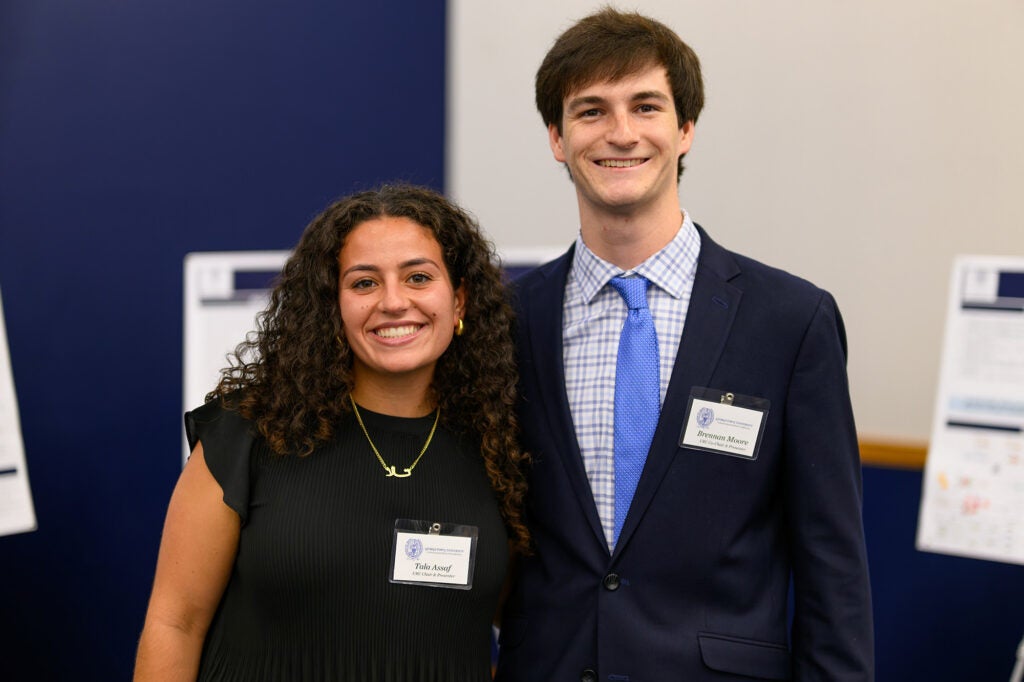
Tala Assaf (H’26) and Brennan Moore (H’27) co-chaired this year’s conference.
The 2026 conference was co-chaired by Tala Assaf (H’26) and Brennan Moore (H’27), who led the student planning committee responsible for everything from reviewing abstracts, selecting oral presenters, printing posters for presenters, and arranging a keynote speaker.
“URC is, at its core, an opportunity for undergraduates to showcase research in a supportive, accessible environment,” said Assaf. “It’s about getting feedback on your work, building confidence, and celebrating the work you’ve done.”
Volunteer faculty serve as conference judges and provide feedback for all student posters as well as the oral presenters. Amanda Palmer, PhD, associate professor at Johns Hopkins Bloomberg School of Public Health, gave a keynote address titled, “Bridging Agriculture & Public Health: Addressing Vitamin A Deficiency Through Biofortification.”
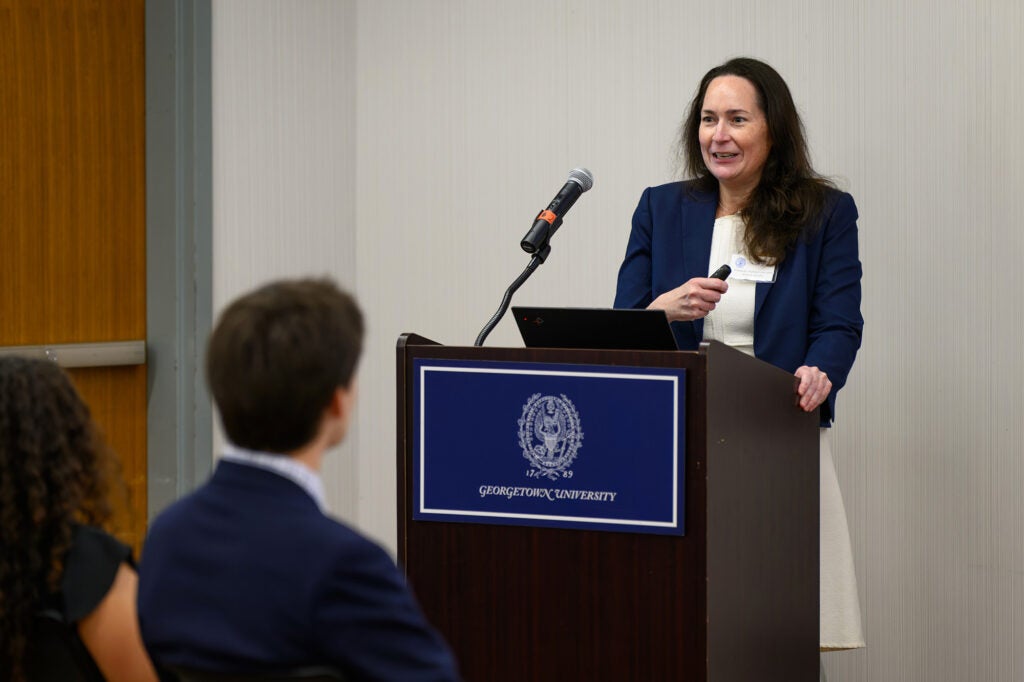
Amanda Palmer, PhD, of Johns Hopkins Bloomberg School of Public Health was this year’s keynote speaker.
“Our keynote really hit a unique intersection of clinical research, chemistry and global health,” Moore said. “[Palmer] also gave practical advice for undergraduates like expecting things to go wrong in research and how to adapt.”
Assaf highlighted the challenges and rewards of undergraduate research. “Research is hard. Things go wrong all the time,” she said. “But that’s part of the process. URC becomes a celebration of that journey: what worked, what didn’t, and what you learned along the way.”
Interdisciplinary by Design
Assaf emphasized the intentional diversity of research represented at the conference. “Even within one major, you see such a range of projects, from public health and global health to bench science and behavioral research,” she said. “You can walk around and see projects on zoonotic disease policy, reproductive health outcomes or biochemical pathways. That breadth is what makes URC so special.”
Moore echoed that sentiment, noting the interdisciplinary reach of participants. “We had students from biology, human science, nursing, psychology, but also math, economics, computer science and even Spanish majors,” he said. “It shows how broadly science and health research can connect across disciplines.”
Students from the Berkley School of Nursing contributed to the conference, including honors students Lily Martucci (N’26) and Kimberly Salgado (N’26), who conducted their own original research.
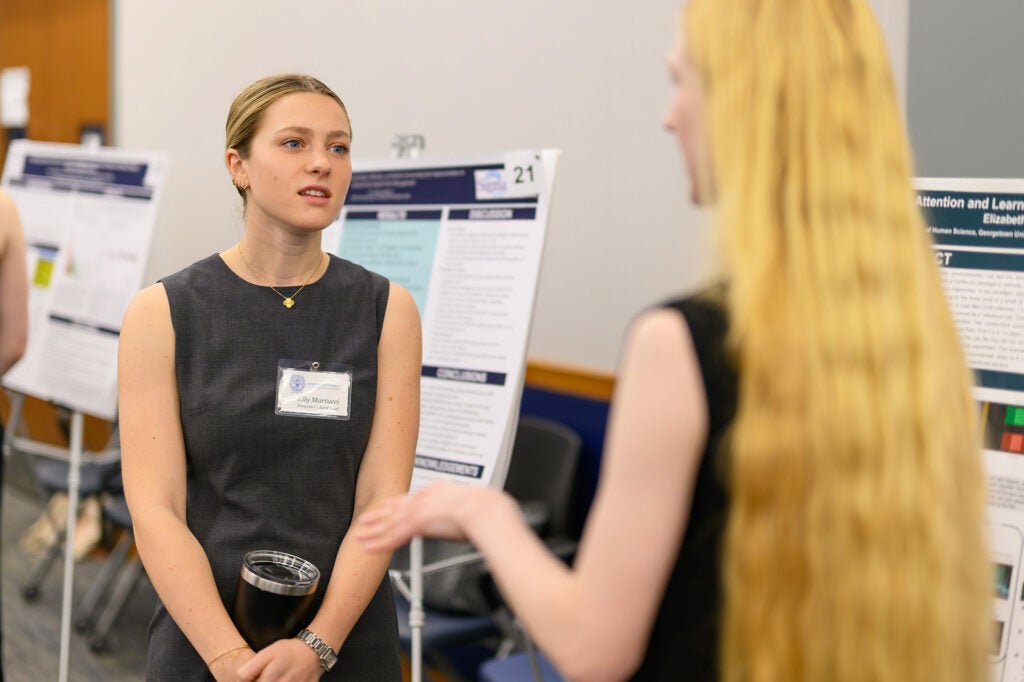
Lily Martucci (N’26)
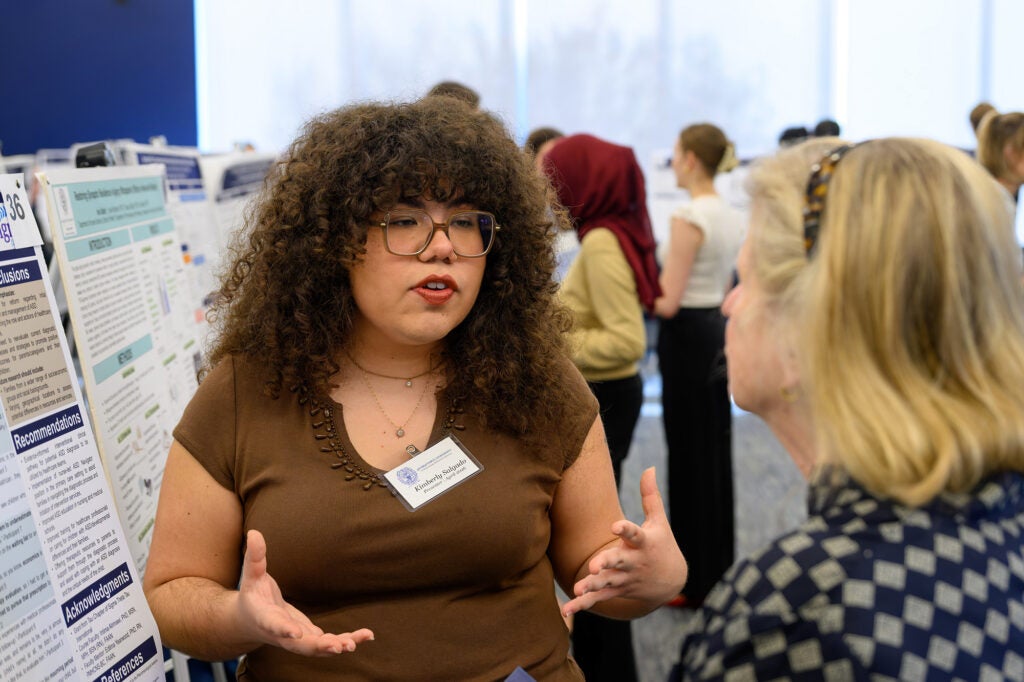
Kimberly Salgado (N’26)
Martucci’s project examined labor and delivery nurses’ perspectives on nonpharmacological pain management. “It was such a fun and educational experience,” Martucci said. “Being able to share my work with those outside of nursing was a reminder that research doesn’t live in the vacuum of just one profession. Explaining my work to a broader audience made me think differently about why it matters, and made me even more proud of it.”
Salgado, who conducted a qualitative study on parents/caregivers navigating autism diagnoses, described the experience as transformative.
“This was my first time getting involved in research, and being able to share my findings was incredibly fulfilling,” she said. “I loved representing the importance of a nursing perspective; our hands-on experience shapes how we interpret findings and make recommendations.”
The Lasting Impact of Undergraduate Research
For many students, the conference is as much about personal growth as it is about research outcomes. “One of the most important things I’ve learned is confidence,” Moore said. “When you explain your research to someone unfamiliar with your field and they understand it, that’s powerful. It really shows what you’re capable of as an undergraduate in presenting complex work.”
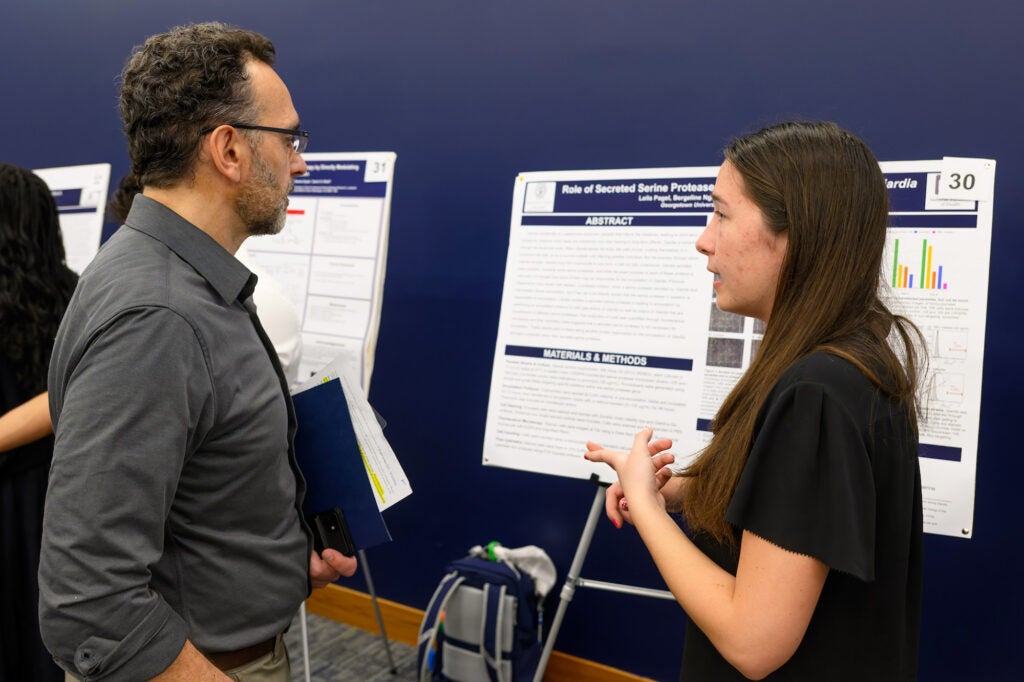
Leila Pagel (C’26) explained her poster to faculty advisor Pablo Irusta, PhD.
Both student leaders emphasized that the skills gained from public speaking and translating complex ideas extend far beyond the lab. “The experience of preparing an abstract, building a poster and presenting your work is invaluable,” Moore said. “Those skills translate into so many areas later in life.”
Faculty leaders emphasized the broader significance of the conference as a platform for undergraduate scholarship.
“The URC provides a fantastic public forum where students’ independent research projects transform from a private undertaking into a shared academic contribution,” said Pablo M. Irusta, PhD, associate professor of human science and faculty advisor for the conference. “This student-driven conference helps students move beyond passive consumption of knowledge and become active creators of it.”
For Assaf, the impact of the URC is both academic and deeply personal. “It’s one of the most meaningful experiences I’ve had at Georgetown,” Assaf said. “It’s a celebration, not just of research, but of growth, resilience and curiosity. You leave proud of what you’ve accomplished and excited for what comes next.”
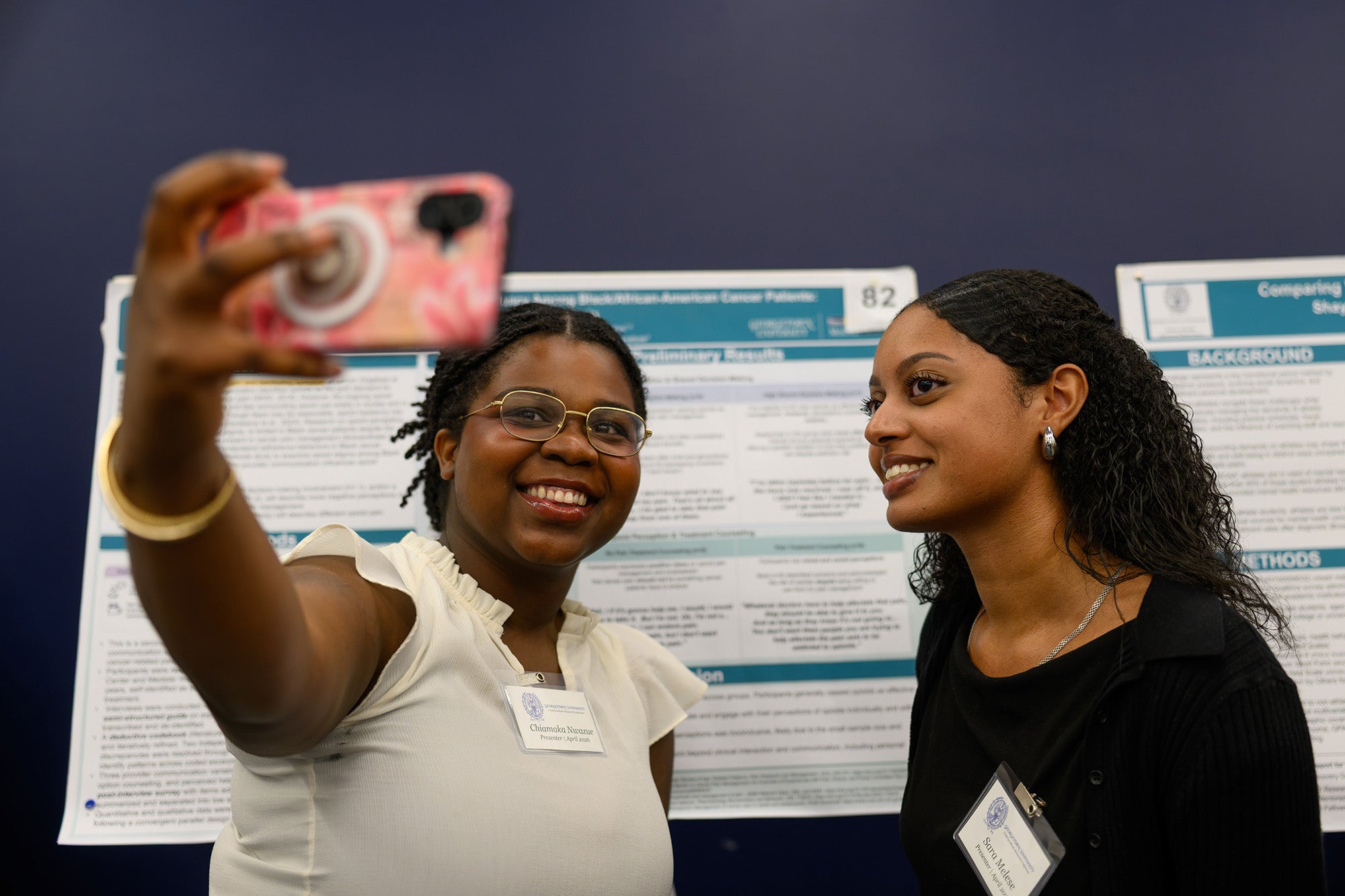
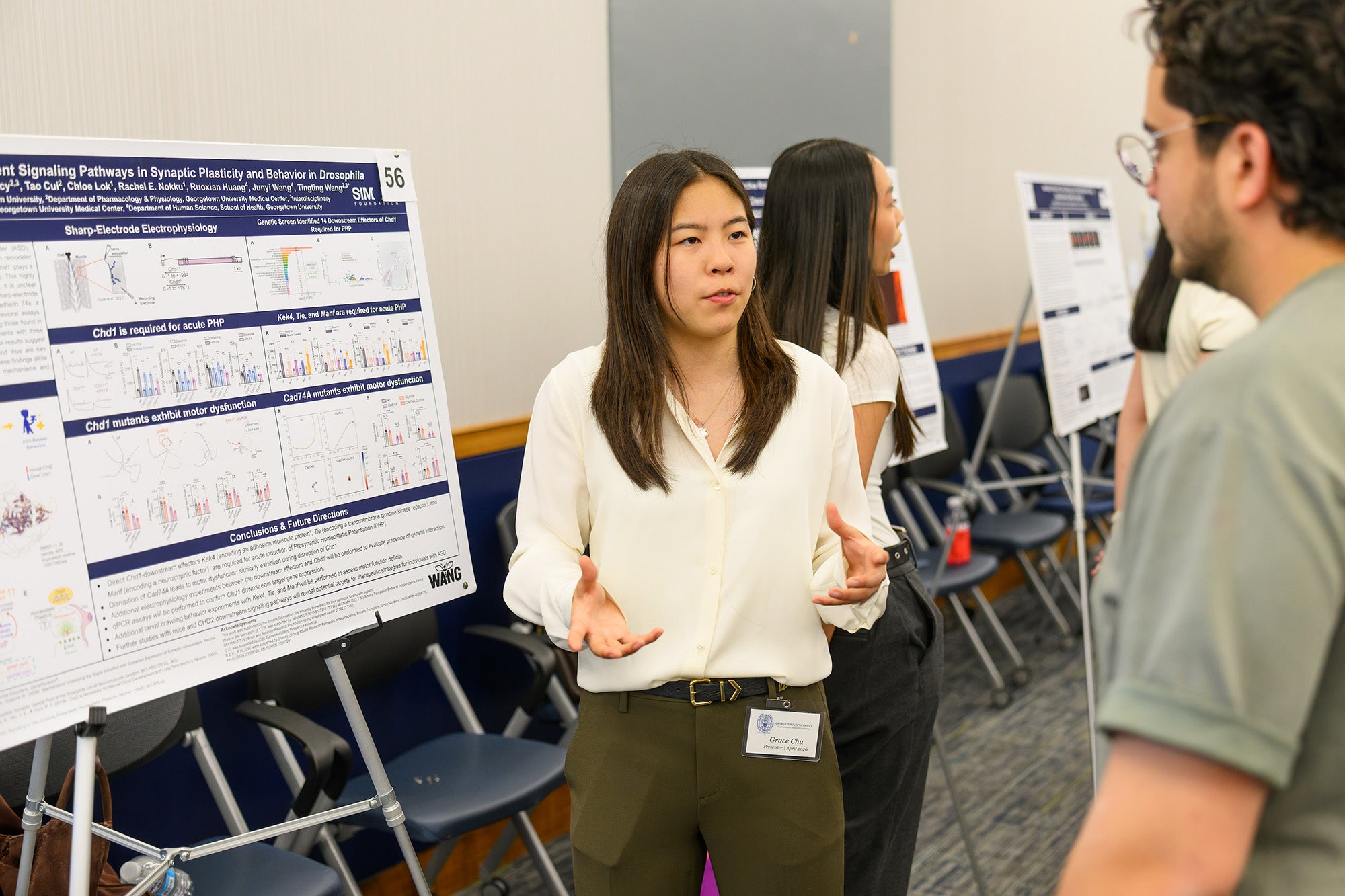
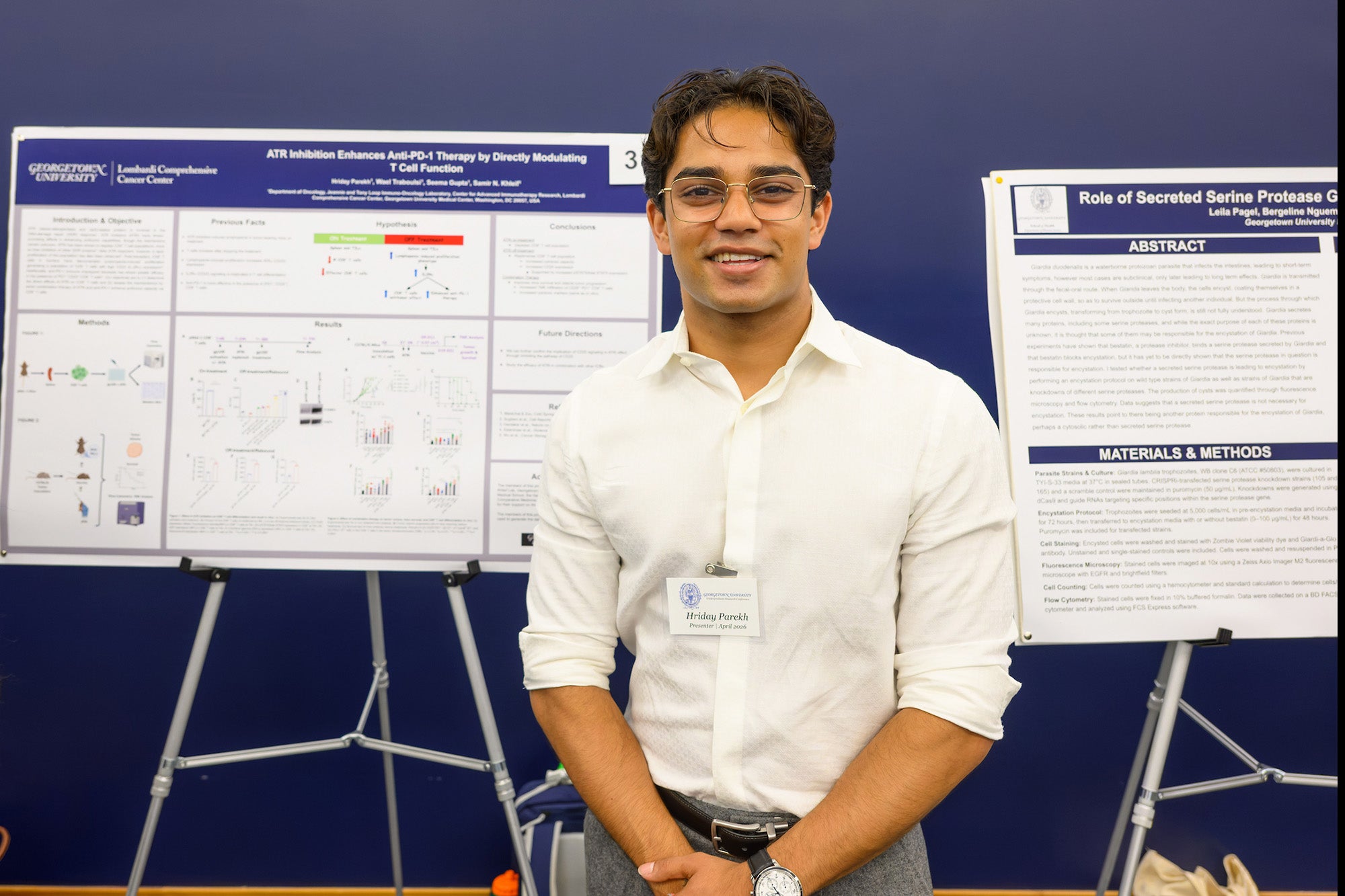
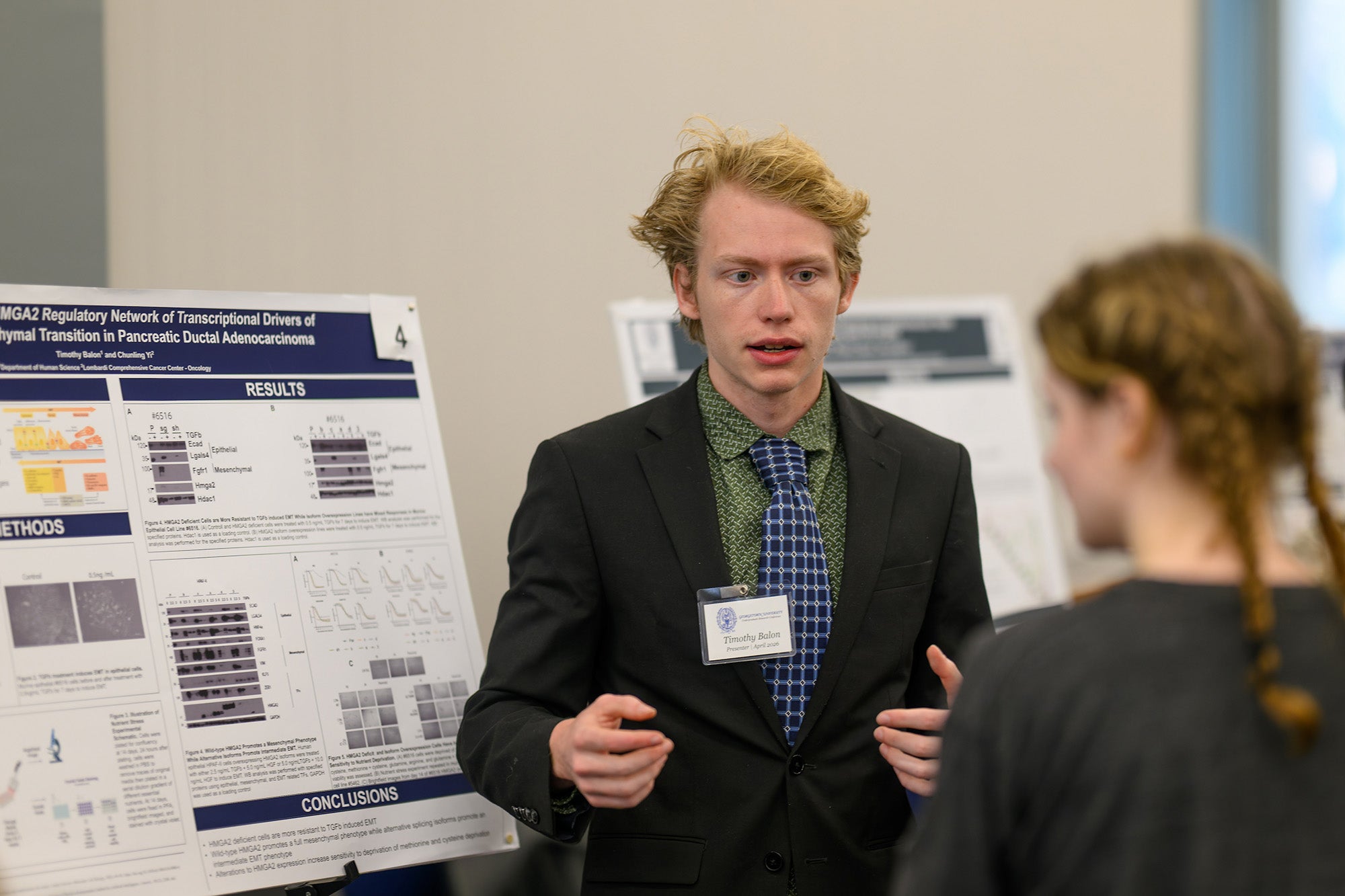
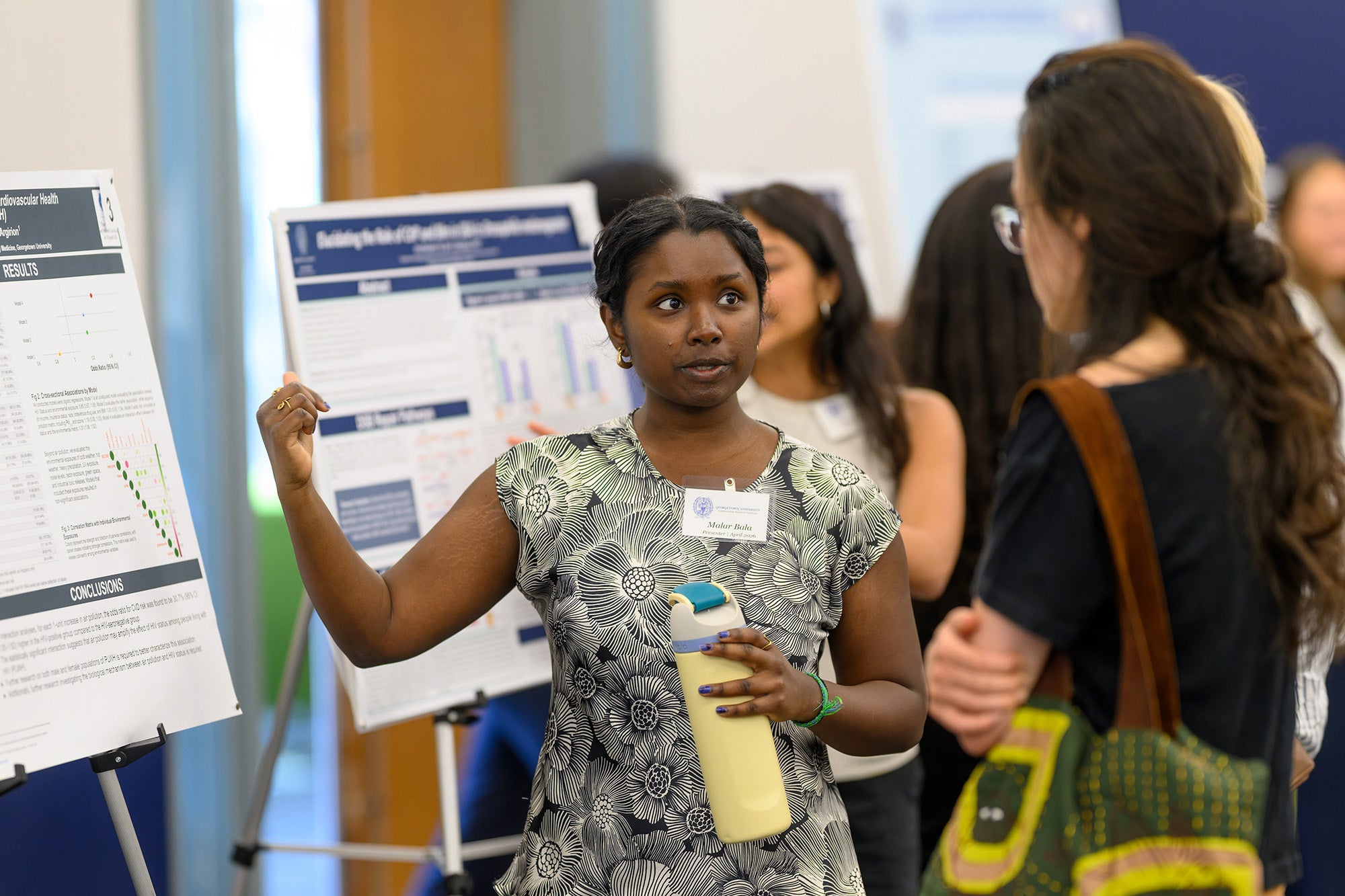
Scenes From the 2026 Undergraduate Research Conference
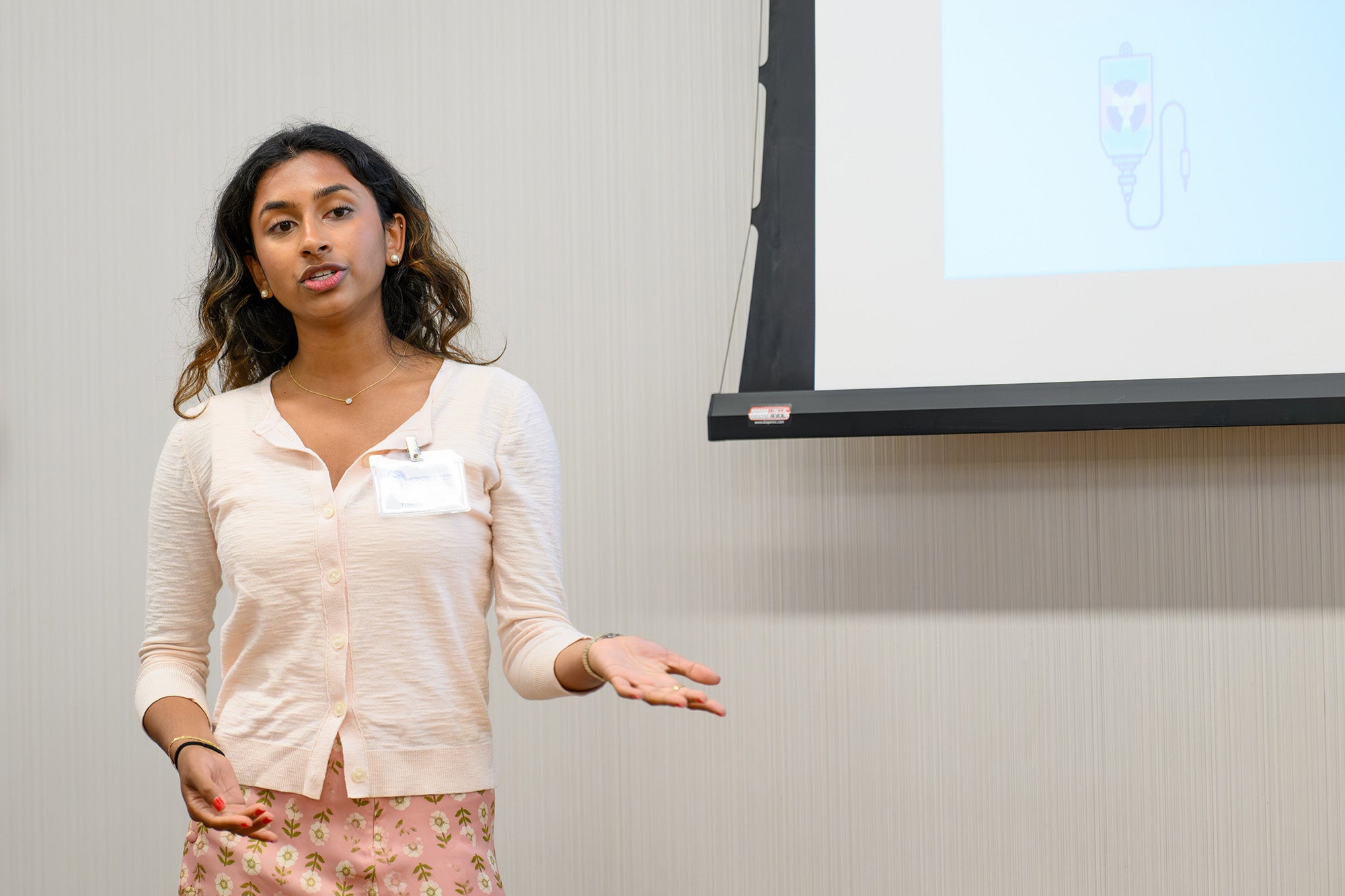
End of carousel collection.
The Undergraduate Research Conference is made possible by the generous support of the Wietlisbach family.
Heather Wilpone-Welborn
GUMC Communications
All images: Georgetown University