
School of Health Student Uncovers Barriers to Sickle Cell Care in Rural Ghana

Tara-Yesomi Wenegieme (G’26)
(December 9, 2025) — A curiosity sparked by a childhood health scare led Tara-Yesomi Wenegieme (G’26) thousands of miles from Washington, D.C., to research sickle cell disease (SCD) at a district hospital in Ghana.
Wenegieme, a student in the Master of Science in Global Health program, is completing her 14-week international fieldwork requirement in Dodowa, a rural part of Ghana, where she is investigating the social and cultural factors that delay treatment among SCD patients. She hopes to understand the systemic issues and cultural beliefs that can complicate access to care. Wenegieme received support from the School of Health’s experiential learning fund to conduct her research.
A Personal Drive for a Macro-Level Impact
Wenegieme came to Georgetown after four years as a research manager in the Kidney Pathophysiology Research Group at Wright State University. She realized she wanted to move beyond the “micro-level” of cells to address disease on a “more macro level” and better understand the patient’s perspective.
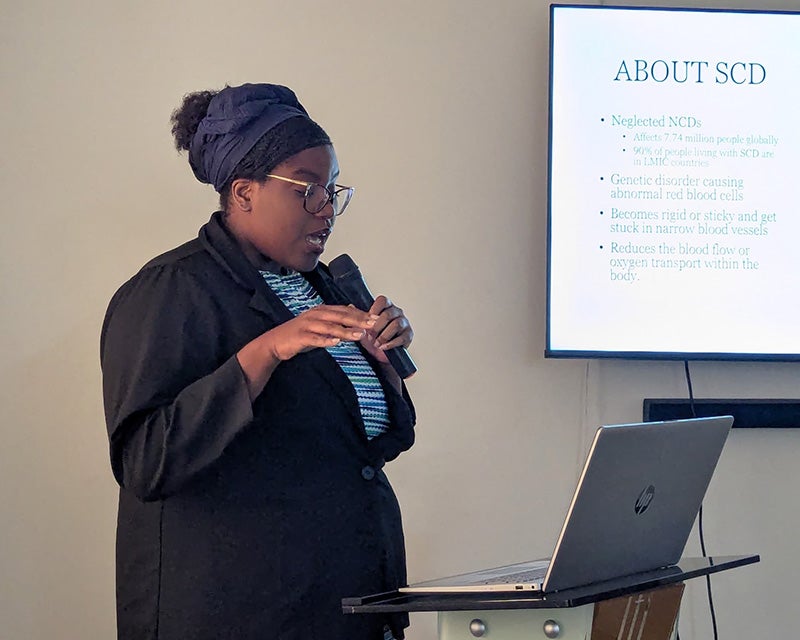
Wenegieme’s research into sickle cell disease has been fueled by a desire to better understand the patient’s perspective.
The topic of SCD is personal for Wenegieme. As a child, she mistakenly believed she had the condition after learning that she carried the markers for the disorder. This emotional experience fueled her passion to learn more SCD.
“I thought I had sickle cell disease and wanted to learn more about the condition,” Wenegieme said. “When I was young, I even wanted to help find a cure and later wanted to contribute to the field of hematology.”
Wenegieme’s family is from Nigeria, a country with a cultural and health system similar to Ghana’s, making West Africa her preferred location for her research. “Ghana is like a sibling to Nigeria,” she said. “It feels like home here.”
Understanding Delays in Treatment
Working with the Shai-Osudoku District Hospital and its sickle cell clinic, Wenegieme has conducted interviews with seven health care providers and 15 patients. Through the interviews, she has learned that challenges with paying for care before receiving treatment and difficulty in reliable transportation are two factors deterring care.
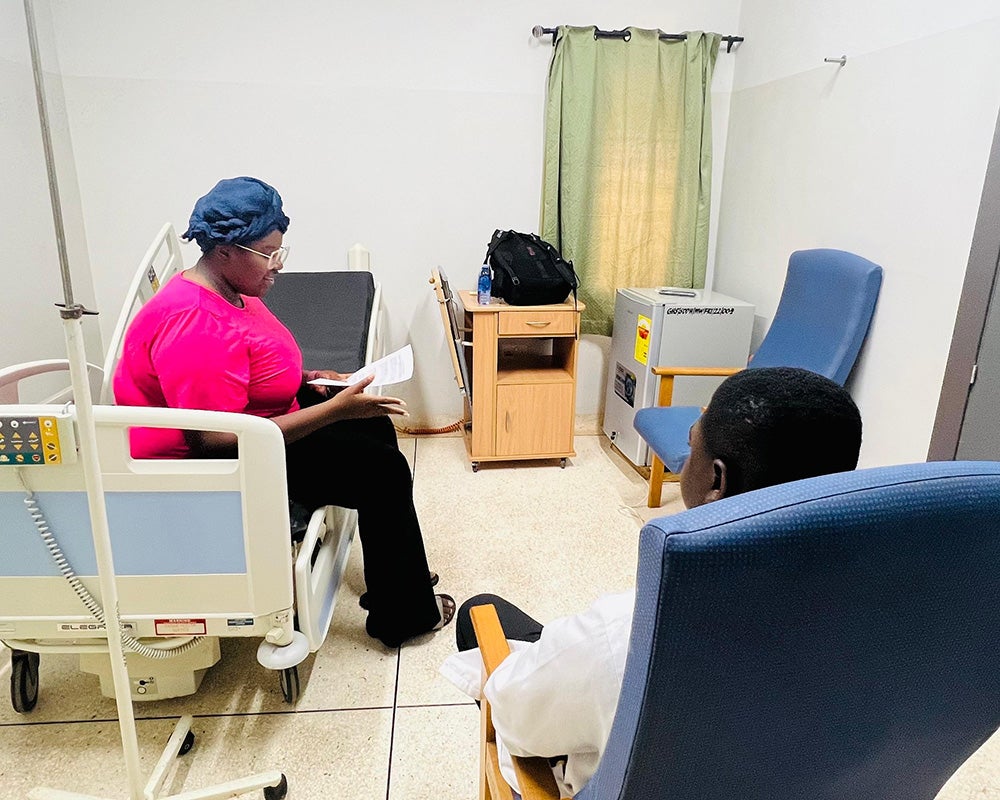
For her research, Wenegieme conducted interviews with health care providers and patients.
The interviews also revealed many cultural reasons that Ghanaians defer medical care for SCD, preferring instead to seek out local herbalists or prayer camps for treatment.
“Many people here believe that sickle cell is a spiritual attack rather than a lifelong medical condition,” said Wenegieme. Over 70% of the Ghanaian population identifies as Christian, and another 20% identify as Muslim, creating a culture where faith informs decision-making, including decisions about health care.
After experiencing a lack of empathy from providers about SCD, patients also felt that the condition carries a stigma, Wenegieme said, prompting them to consider alternative treatments.
“The health care providers expressed a greater need for health literacy about the condition in Ghana and supported more training for physicians and nurses in hematology, and even the creation of SCD specialists to better understand the condition,” she said.
Wenegieme also found that medical facilities were not as well stocked with certain medical equipment that can impact patients with SCD. For example, a lack of oxygen can affect care for acute chest syndrome, a complication that can arise from SCD.
“Despite these limitations, the sickle cell clinic is doing an amazing job at ensuring that patients with SCD have the medications and care they need to thrive,” said Wenegieme.
Call for Action and Future Goals
The research, which will form the basis of Wenegieme’s master’s thesis, is designed to provide actionable insight for providers and policymakers. Wenegieme’s work promotes improving health literacy about SCD for both patients and providers, as well as increasing health care staff specialized in hematology that can provide caring communication to patients with SCD.
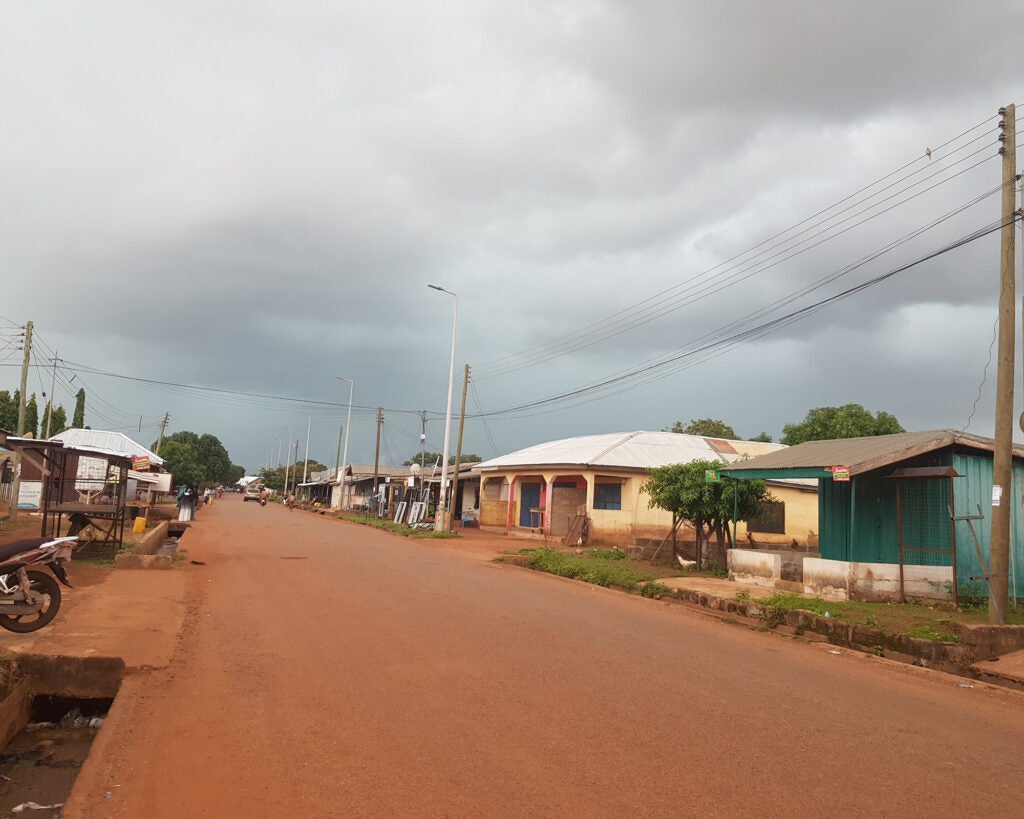
Wenegieme has experienced Ghana’s frequent, long-lasting rainstorms. (Image: OJjnr, CC BY-SA 4.0, via Wikimedia Commons)
Despite the intensity of her research, Wenegieme has found time to appreciate the Ghanaian culture, enjoying local favorites like tiger nuts, banku with tilapia, and the sweet drink sobolo made from hibiscus. She even found the frequent, long-lasting rainstorms to be an “amazing experience.”
Wenegieme, who dreams of becoming a physician, says her fieldwork has solidified her desire to combine clinical practice with research. “It opened my eyes to how much a provider expressing empathy can really impact care for people,” she said.
Heather Wilpone-Welborn
GUMC Communications
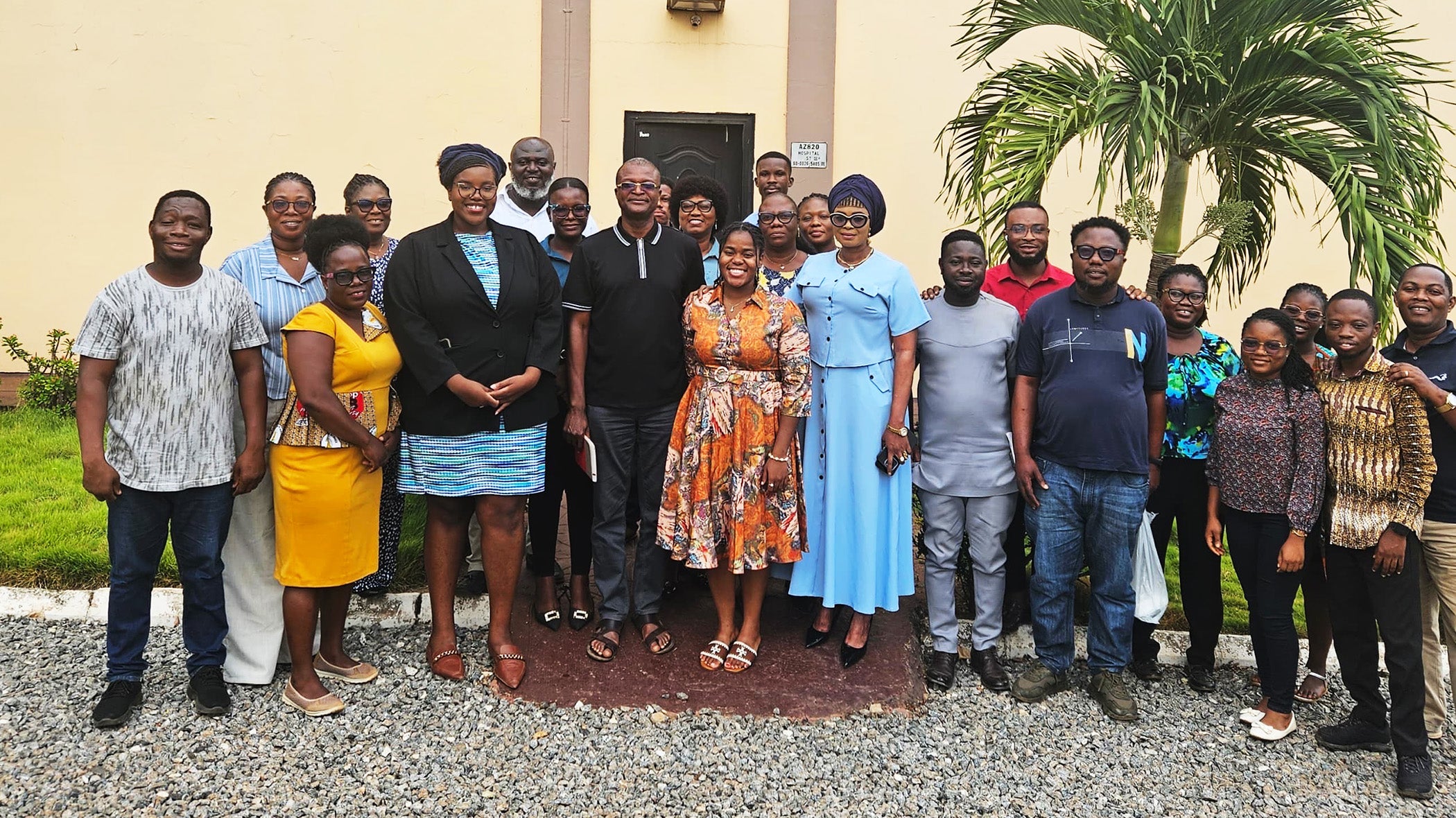
Top image: Wenegieme (pictured fifth from left) stands with doctors and medical staff outside the Dodowa Health Research Centre in Dodowa, Ghana.