
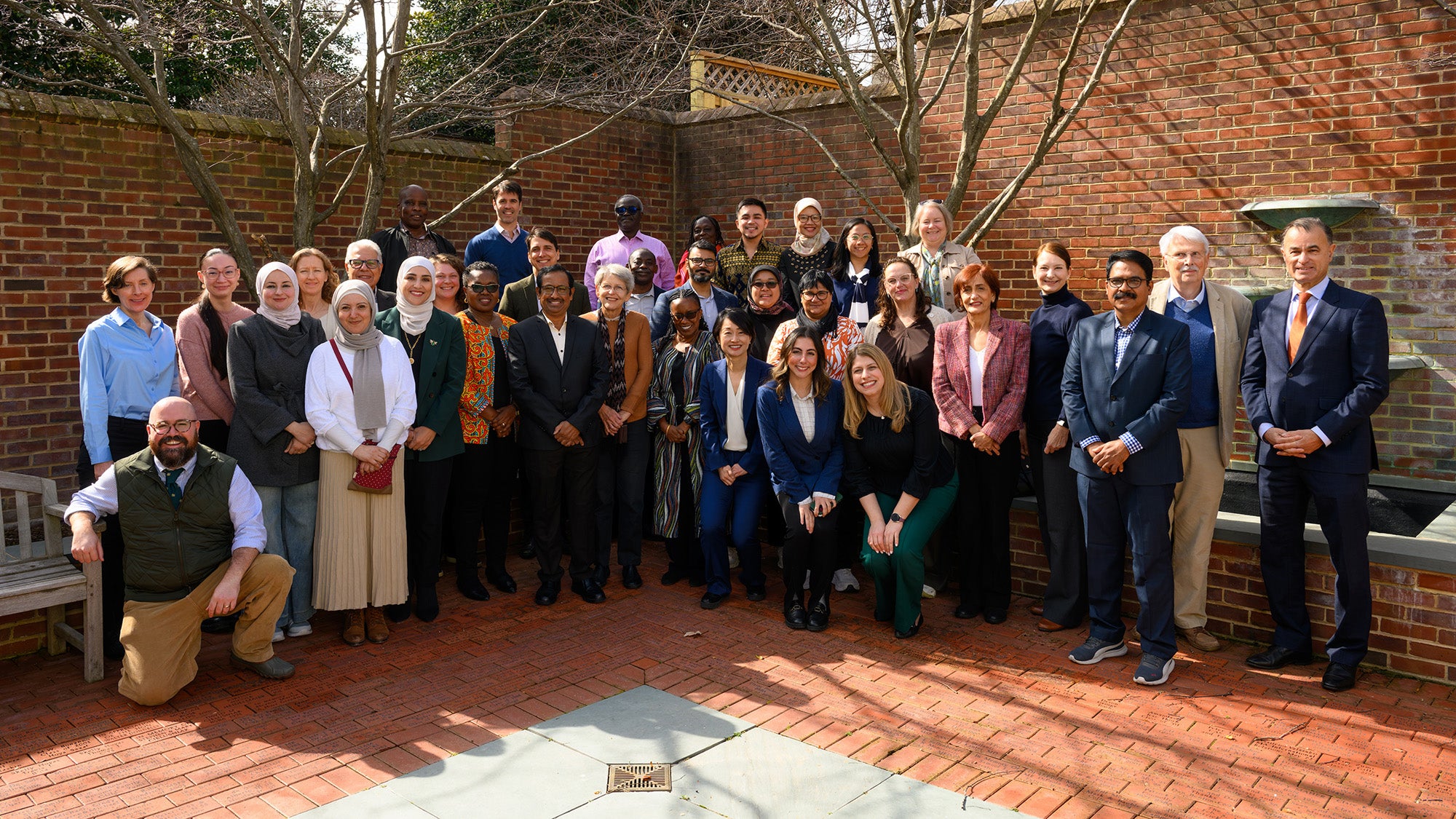
Global Ties, Local Impact: School of Health Hosts International Preceptors
(March 31, 2026) — Georgetown’s School of Health became a global crossroads as preceptors from Indonesia, Tanzania, Mexico, Kenya, India and beyond gathered in Washington recently to celebrate over two decades of international partnership. The meeting served as both a homecoming for longstanding mentors and an orientation for new partners, all unified by a single mission to provide Georgetown students with a real-world experience that transcends the classroom.
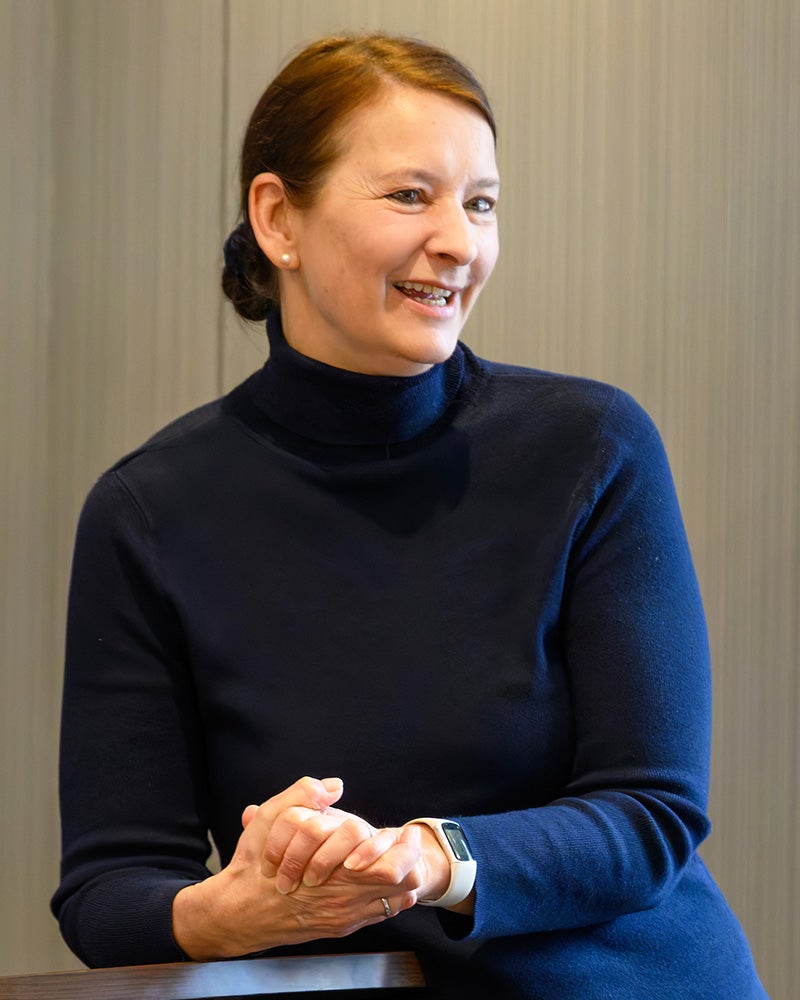
Myriam Vuckovic, PhD
Myriam Vuckovic, PhD, professor in the Department of Global Health, explained that the experiential learning exchange has evolved significantly since its founding in the early 2000s. What began as an undergraduate requirement has expanded to include graduate students and joint research projects between Georgetown faculty and the preceptors themselves.
“It’s an amazing network of scientists, researchers and academics,” Vuckovic said. “We tap into it for the students’ benefit, and there are other reasons to connect, like doing joint research projects.”
Building Partnerships
The event’s keynote speaker, Keith Martin, MD, executive director of the Consortium of Universities for Global Health, emphasized that Georgetown’s model stands out because it prioritizes mutually beneficial relationships between the host sites and the students.
“One of the interesting opportunities here at Georgetown is the ability to be able to forge relationships with institutions that are abroad, but also to be able to do it in a way that meets the needs of those institutions,” Martin said.
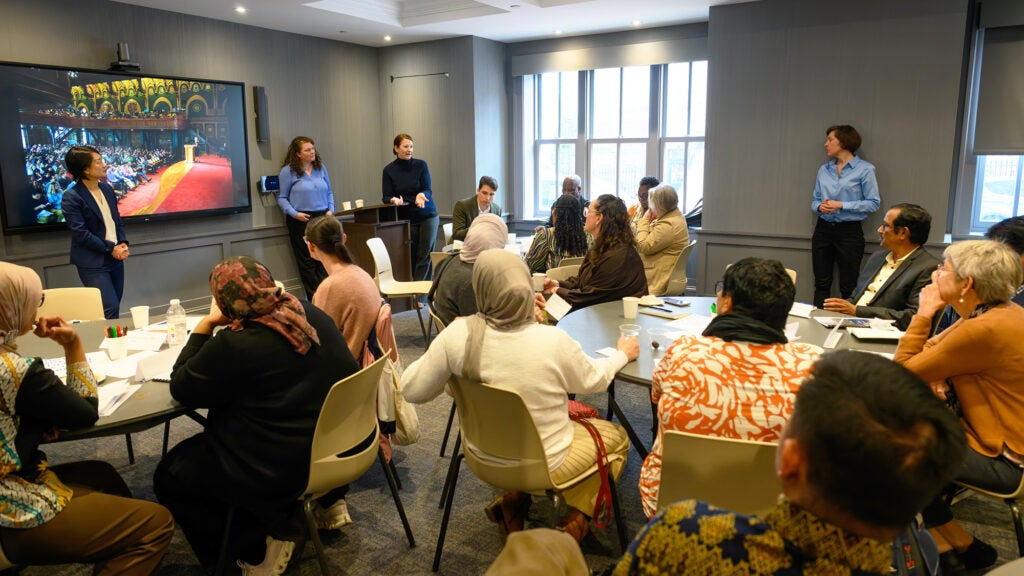
The meeting for global health preceptors served as both a homecoming for longstanding mentors and an orientation for new partners.
This philosophy of mutual benefit was echoed by John Gyapong, PhD, secretary general of the African Research Universities Alliance in Accra, Ghana, who has been a partner for over 20 years.
“If you ask me why I’m here, it’s because of friendship,” Gyapong said. “We want to give the students a good experience. When we’re talking about improving global health, we are looking at health that affects everybody, be it in Ghana, where I come from, or the United States.”
Translating Research into Policy
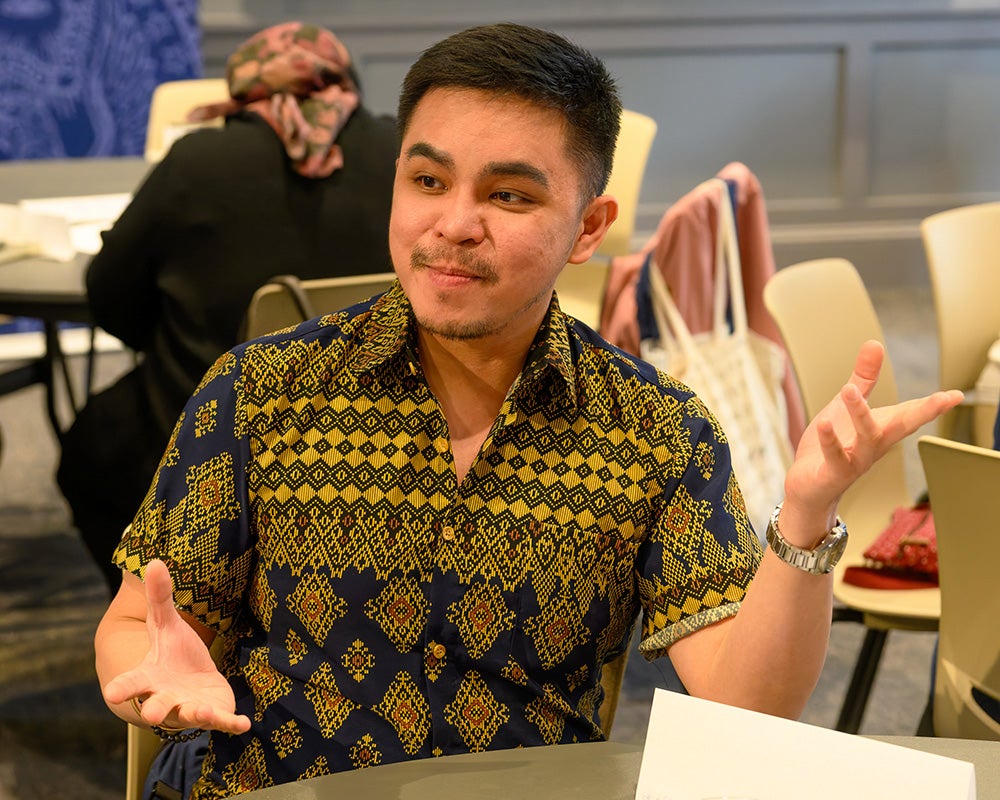
Geminn Louis C. Apostol, MD
In the Philippines, the partnership with the Ateneo School of Medicine and Public Health has recently moved from an agreement on paper to a vibrant reality. Geminn Louis C. Apostol, MD, director of the environmental health and global health security program, shared how Georgetown students are already making tangible impacts in Manila through practical research.
“We don’t treat them like students or interns,” Apostol said. “They have very real projects and portfolios. They are scholars who bring with them certain competencies.”
Apostol highlighted recent student projects that addressed critical local issues, including one student who helped map the Philippines’ profile for emerging infectious diseases and developed a manual for future pandemic responses.
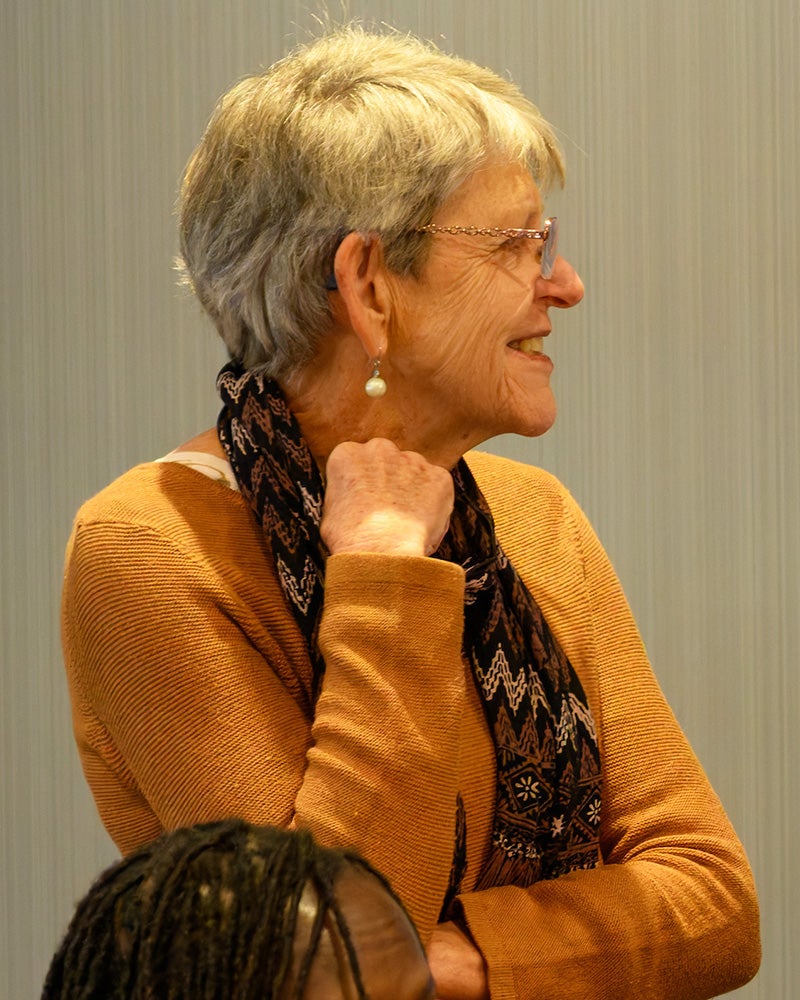
Sandra Thompson, PhD
For Sandra Thompson, PhD, director of the Western Australian Centre for Rural Health, another longtime partner, the experiential learning opportunities for students offers a chance to see the social disparities that exist even in high-income countries.
Thompson recounted a project where students traveled to Carnarvon, a remote location 300 miles north of Geraldton, the closest major city, to study social isolation in the elderly. “They basically designed the study, wrote the ethics application, collected the data, analyzed it, and wrote up a publication,” Thompson said. “The students always come with a lot of energy, humility and openness to learning.”
A Life-Changing Experience
The meeting also welcomed newer partners from the University of Jordan. Professors Rasha Arabyat, PhD, Rawan AlHeresh, PhD, and Diana Arabiat, PhD, spoke about the upcoming opportunities for students to work in refugee medicine.
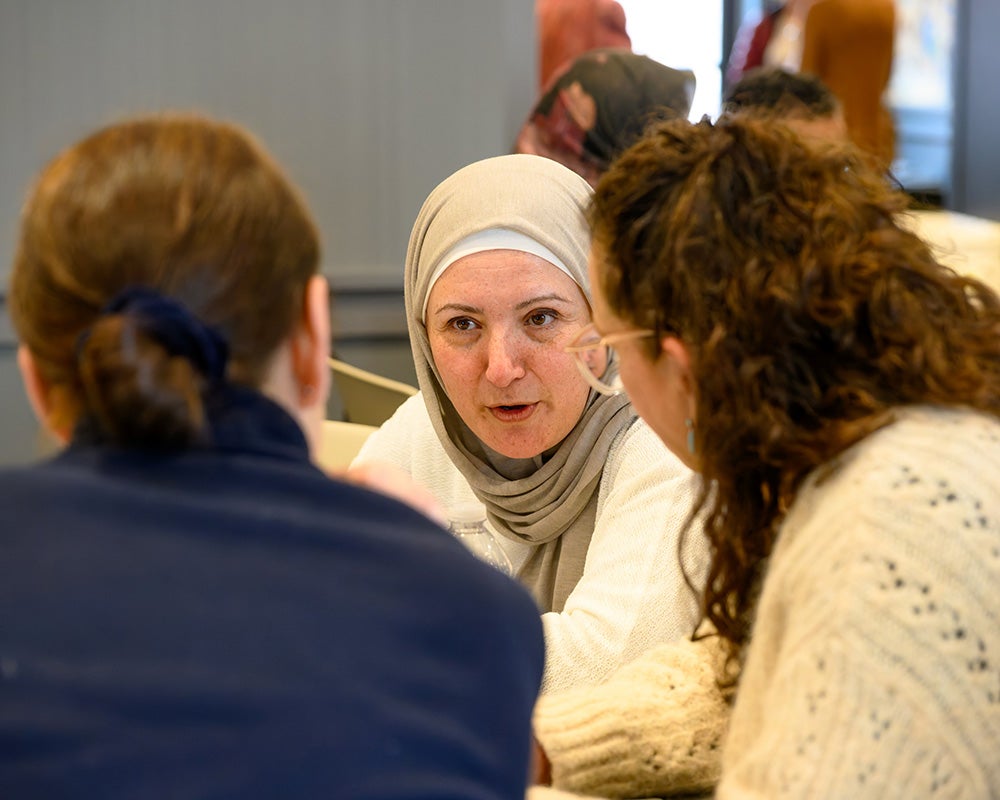
Diana Arabiat, PhD, (center) with Myriam Vuckovic and preceptor Rosario Garcia Miranda
“Global health is about making connections, but also reaching out to the other side,” Arabiat said. “There are always these stigmatizing topics and stereotypes about different cultures. We need to create safe spaces to have these conversations. If we don’t work on the foundation to build these, it’s going to be difficult for us to solve bigger problems.”
For the students, the impact of these experiential learning exchanges is long-lasting. Vuckovic shared that her research surveying over 100 alumni revealed that 90% found the experience deeply impactful on their futures.
“In many cases, this experience was what got them their jobs,” Vuckovic said. “Medical school interviewers were always asking them about it. It’s very unique.”
Heather Wilpone-Welborn
GUMC Communications