
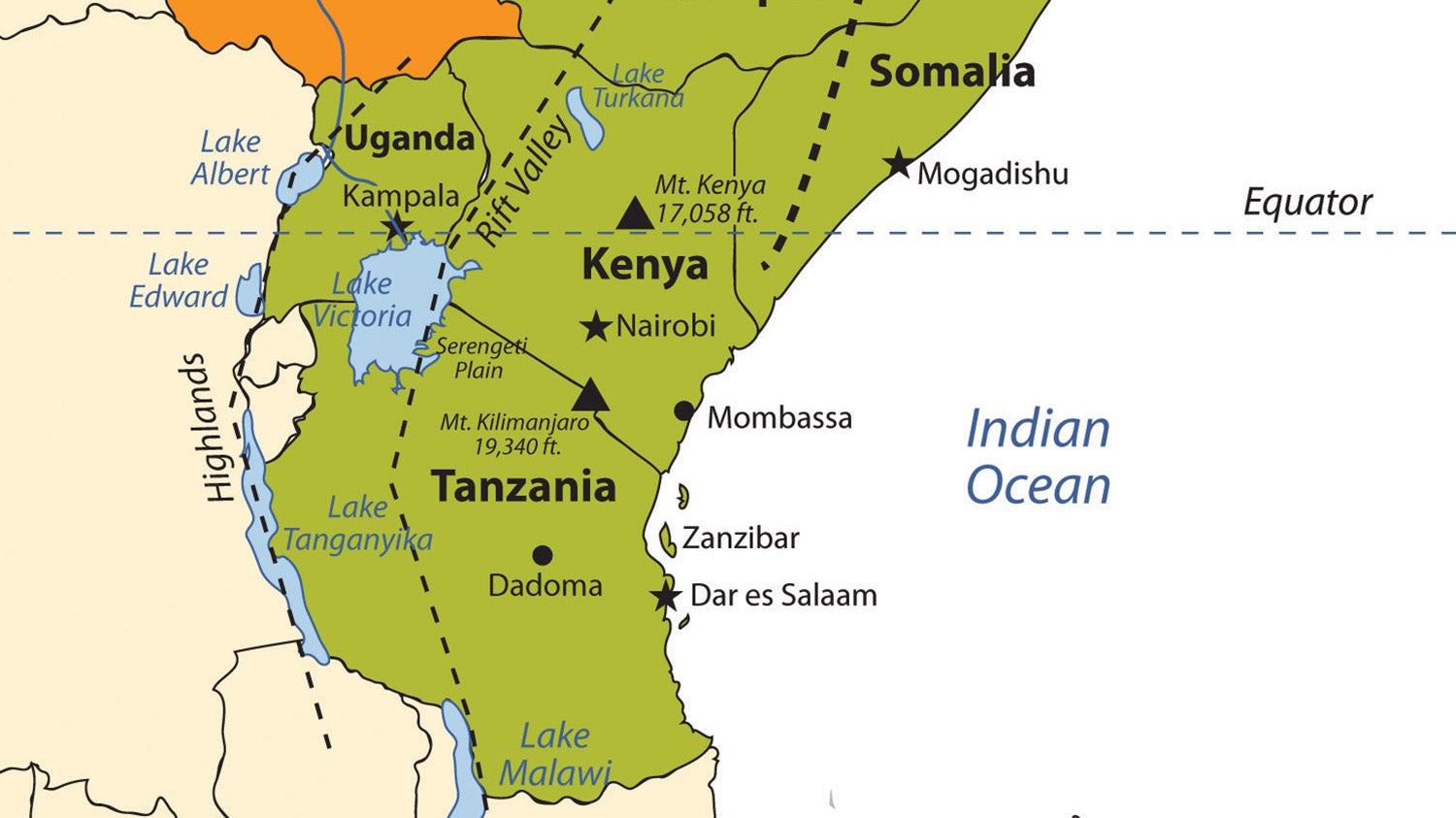
Georgetown Student Scholars Map Health Equity and Community Care in East Africa
(September 18, 2026) — When School of Health students Jordan Pai (H’27) and Kayla Wontumi (H’27) set off for separate countries in East Africa this summer as recipients of the 2025-2026 Maeve Kennedy McKean Global Health Award, their goals extended beyond data collection for their research projects. As they stepped directly into local communities, they sought to re-examine global health and health equity through the eyes of the people living it.
Jointly administered by the Georgetown University Global Health Institute (GUGHI) and the Center for Social Justice Research, Teaching and Service (CSJ), the McKean award honors the legacy of Maeve Kennedy McKean (G/L’09), a dedicated advocate for health equity and human rights. For Pai and Wontumi, now seniors studying global health, the fellowship provided a valuable opportunity to conduct faculty-mentored international fieldwork.
Exercise as Preventive Medicine in Kenya
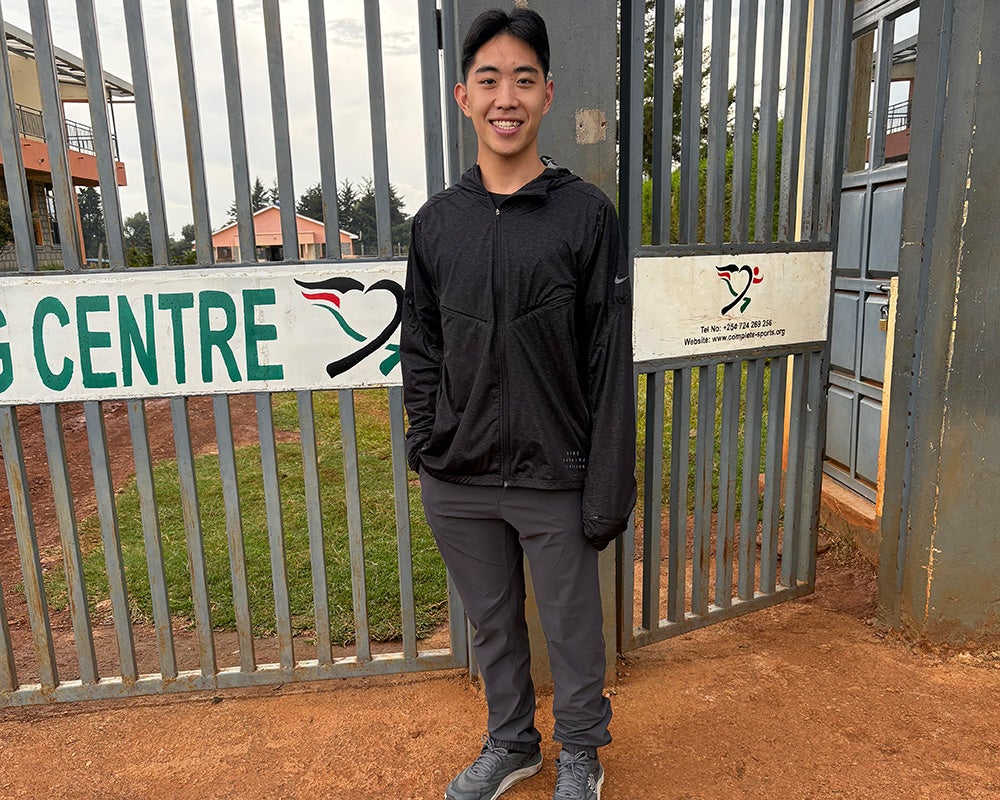
Jordan Pai (H’27)
In Uasin Gishu County, Kenya, a region perched 8,000 feet above sea level and world-famous for producing elite marathoners, Pai spent his summer exploring how to get people interested in running.
Pai, a global health major on a pre-med track, was drawn to the topic because he was “fascinated by how something as universal as running can reveal deeper health inequities.” And as a member of Georgetown’s running club, he was interested in a deeper understanding of an activity he personally enjoys.
Mentored by Emily Mendenhall, PhD, director of the Science, Technology, and International Affairs (STIA) program at Georgetown’s School of Foreign Service, Pai became interested in running as a research project after reading the positive public health data about the activity and wanting to understand what could motivate more people to pursue it.
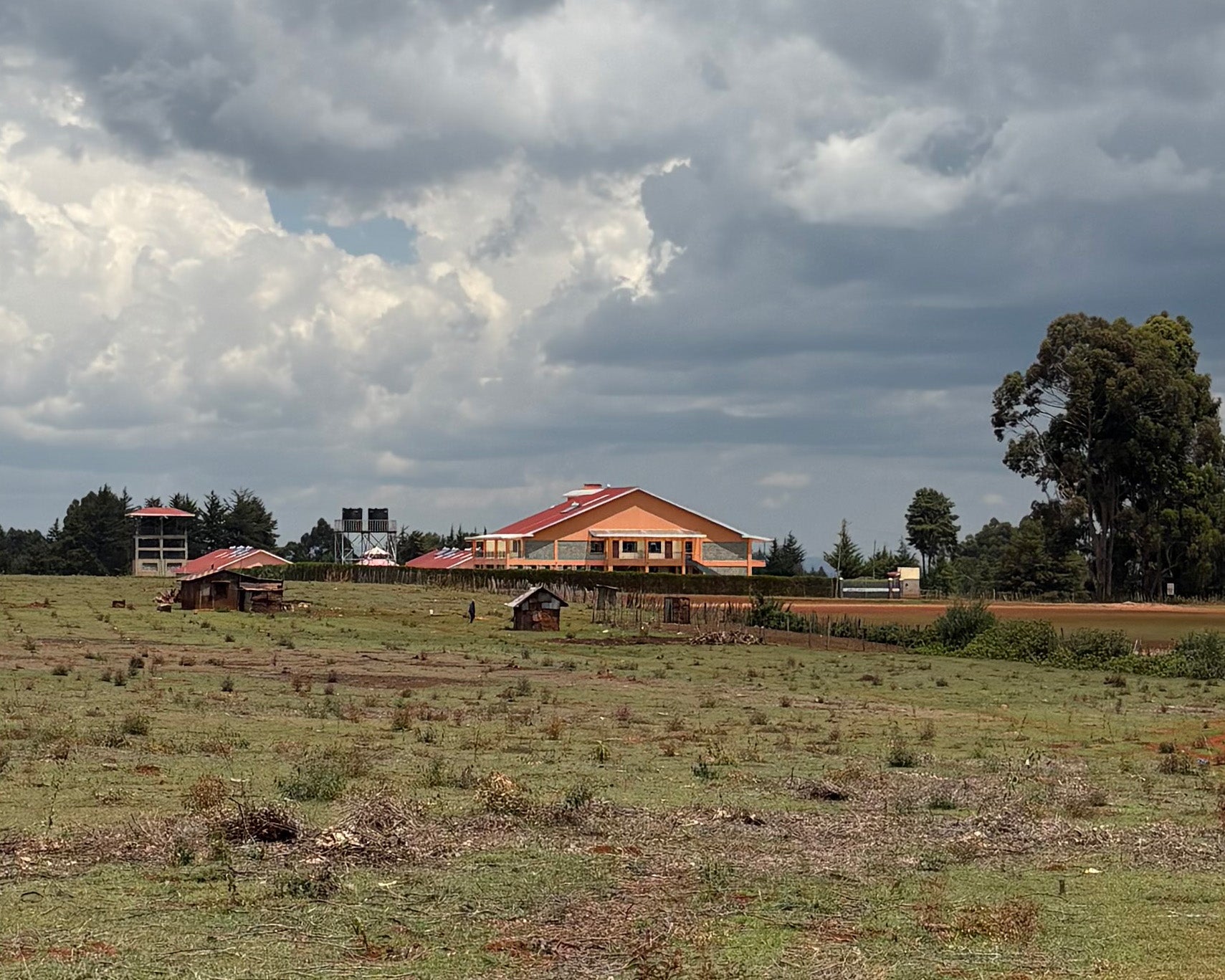
A view of the Complete Sports Training Centre, which trains distance runners, in Kaptagat, Uasin Gishu County, Kenya
While conducting qualitative interviews with elite runners at training camps, casual runners and non-runners in Kenya, Pai noticed a contrast between the Western exercise culture he was familiar with and the local social structures. Where running in the West is often an isolated, solitary endeavor, he observed that in Kenya, “nobody runs by themselves.” Groups train together under the Swahili concept of harambee, pulling together, to draw strength from one another.
That community connection heavily influenced how locals viewed wellness. While competitive runners described running as the core anchor of their mental health and daily stress relief, non-runners often turned to sedentary habits to unwind, which Pai noted can be counterproductive over time.
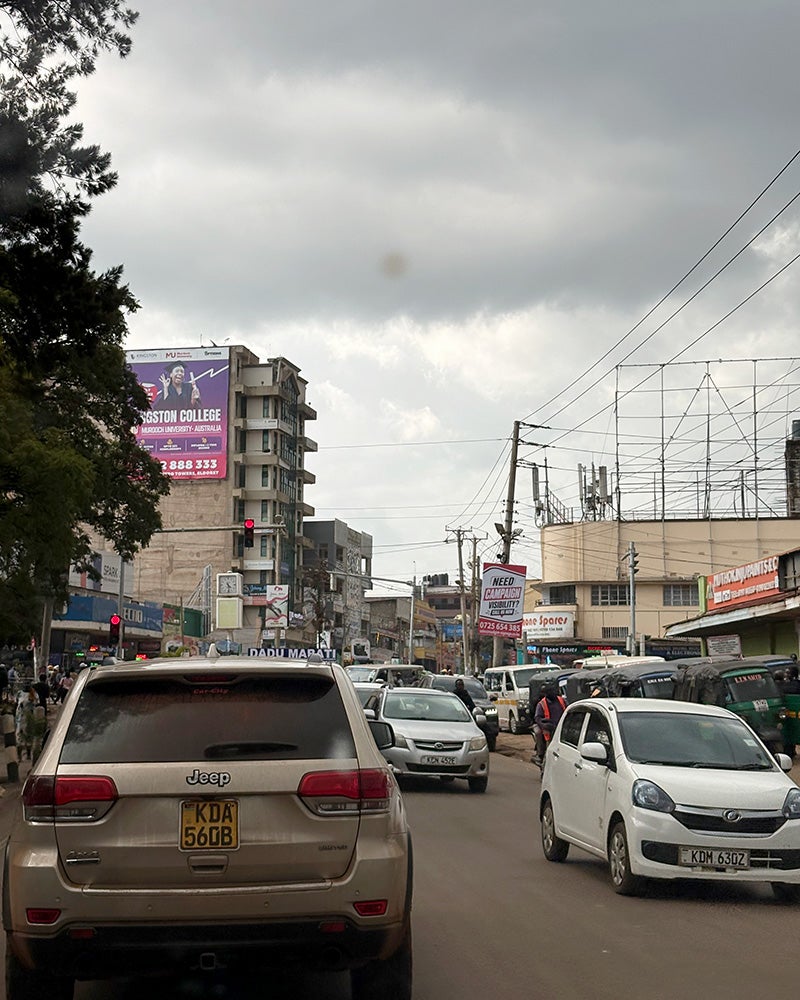
Pai found an understanding in Kenyan culture about running’s health benefits.
“Most runners seemed drawn to the activity as a way to mental strength,” said Pai. “Hope is such a strong feeling in the culture and in an area where there are so many elite runners, the hope that comes from running is hope for better economic opportunities.”
Yet, even outside the individuals who pursue running as a career, there was still an understanding in the culture about the health benefits of the activity. “Even nonrunners understood that you need to ‘sweat twice a week’ to be healthy,” Pai said.
Ultimately, Pai hopes to use the information gathered from interviews to develop a public health campaign for governments encouraging more people to pursue running. “Whether the messaging focuses on relieving stress, reducing mortality or building mental strength, public health messaging should integrate these local understandings of the importance of movement,” said Pai.
Opportunities for Maternal Health in Zanzibar
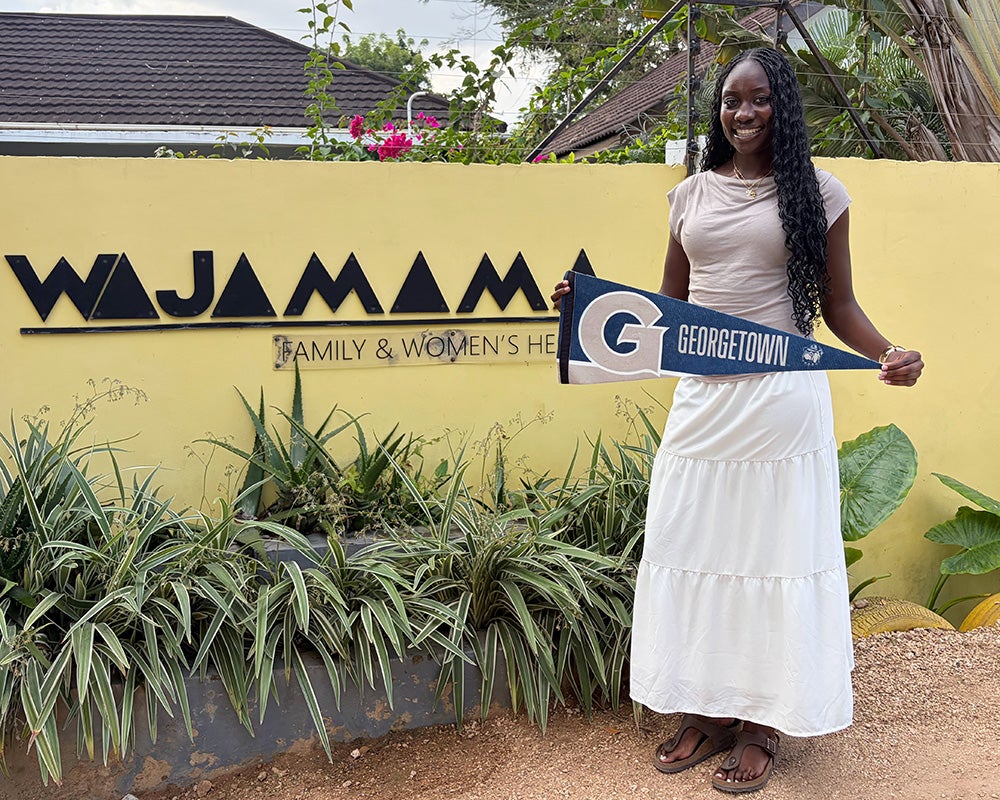
Kayla Wontumi (H’27)
Meanwhile, in Zanzibar, Tanzania, Wontumi focused her fieldwork on maternal mental health. Collaborating with WAJAMAMA, a local nonprofit foundation founded by Georgetown nurse-midwife alumna Nafisa Jiddawi (NHS’14), and mentored by Christina Marea, PhD, MA, MSN, FACNM, assistant professor in the Berkley School of Nursing, Wontumi explored mental health among women attending WAJAMAMA’s Group Care Model (GCM) across six rural clinic sites.
Wontumi’s interest stemmed from a core conviction that “maternal health is a human right.” She partnered with WAJAMAMA’s team to better understand how group antenatal care, where pregnant women gather with healthcare facilitators to share experiences and receive prenatal education, can “empower mothers to advocate for their health needs.”
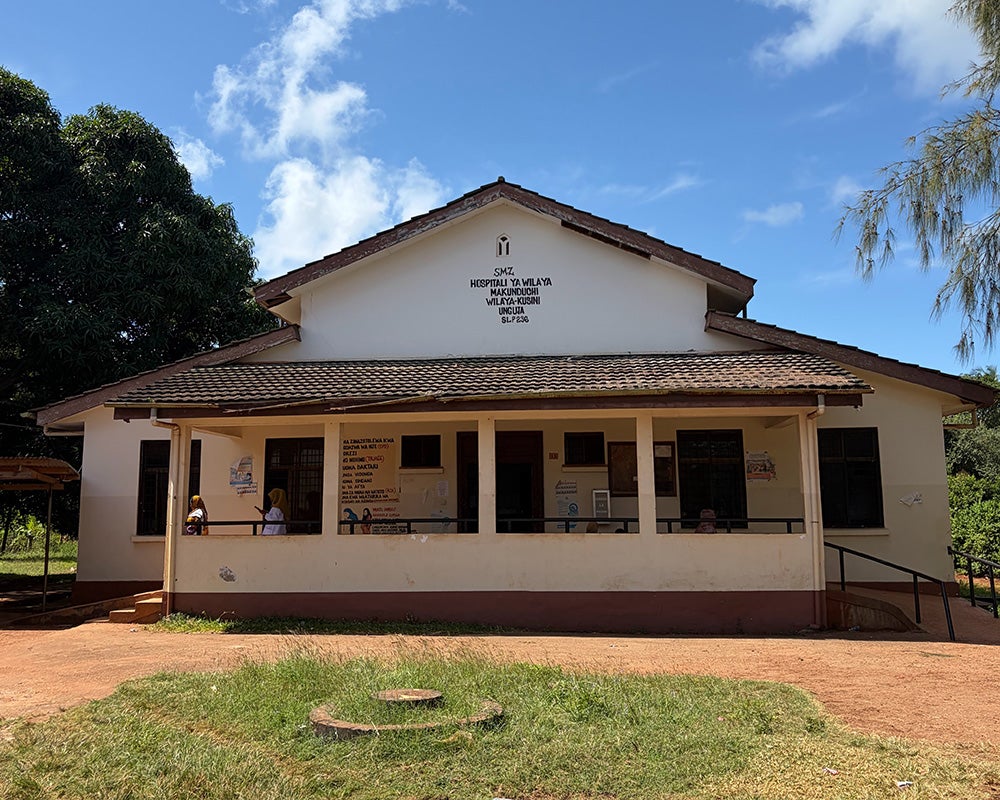
Hospitali Ya Wilaya Makunduchi was one of Wontumi’s clinical sites.
Working closely with Jacqueline Owden, WAJAMAMA’s mental health lead, Wontumi sought to develop a greater understanding of the barriers and opportunities to mental health care access for pregnant women. After visiting clinical sites in Zanzibar, Wontumi immediately noticed that one of the barriers to care is lack of mental health workers.
“I was struck by how overworked the clinic teams were,” said Wontumi. “Often the clinics had one doctor and two or three nurses serving a large patient load.” She noted that WAJAMAMA’s group care sessions, led by nurse-midwives, provide a safe and supportive space for pregnant women to learn together, share their experiences, ask questions, and build confidence in their abilities to care for themselves and their newborns.
Her research project gathers insights from both healthcare workers and pregnant mothers to build a more complete picture of maternal mental health. “So often in health studies, provider perspectives are prioritized,” Wontumi noted, “but we need to listen directly to those receiving care as well.”
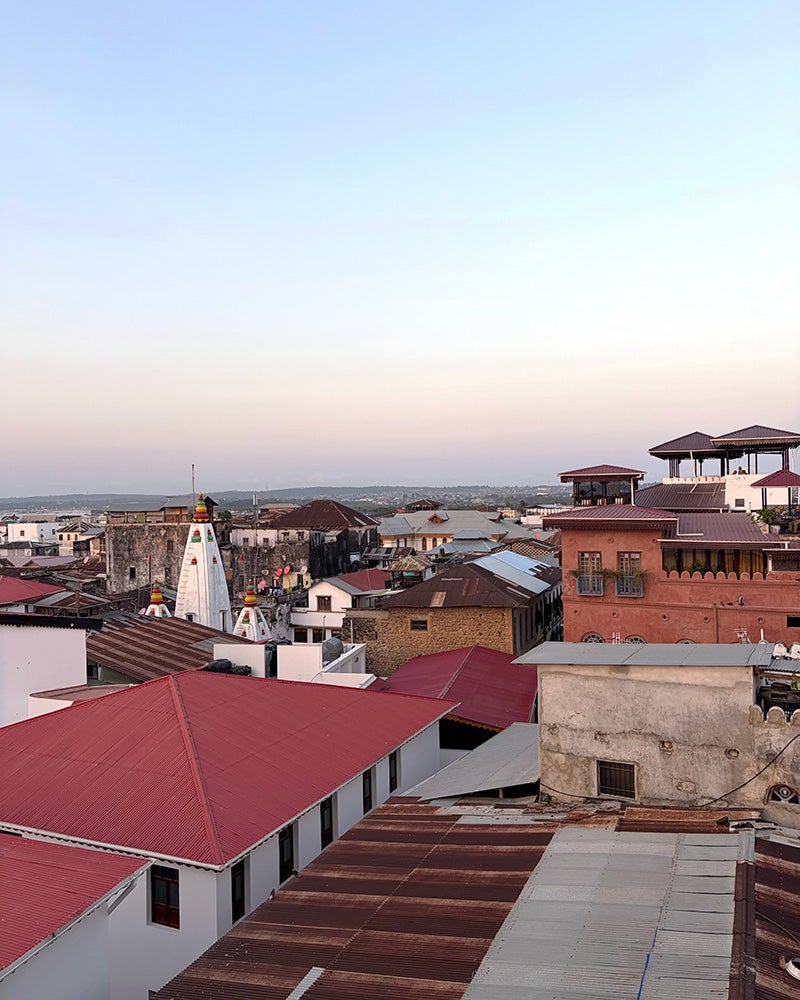
A rooftop view of Stone Town in Zanzibar
Beyond the research collection, living in Stone Town for two months pushed Wontumi out of her comfort zone, teaching her the value of immersion. “If you asked me during my freshman year if I would live halfway across the world by myself to conduct research, I would have said no,” said Wontumi. “It really showed me what a career in global health looks like, living in and with a community, learning about a culture, and working at a grassroots level.”
Wontumi encourages underclassmen to apply for the McKean scholars award. “It is an invaluable opportunity,” she said. “To build your own research study from the ground up with a mentor and community partner, go abroad, and get hands-on experience as an undergraduate, it’s a great opportunity to build real, tangible skills.”
Pai and Wontumi are currently compiling their data to present at the annual Global Social Justice Summer Research Symposium on September 18 in the Healey Family Student Center.
Heather Wilpone-Welborn
GUMC Communications
Top Image Credit: World Regional Geography Copyright © 2024 by LOUIS: The Louisiana Library Network, licensed under CC BY-SA 4.0.
Other Images: Courtesy of Jordan Pai and Kayla Wontumi